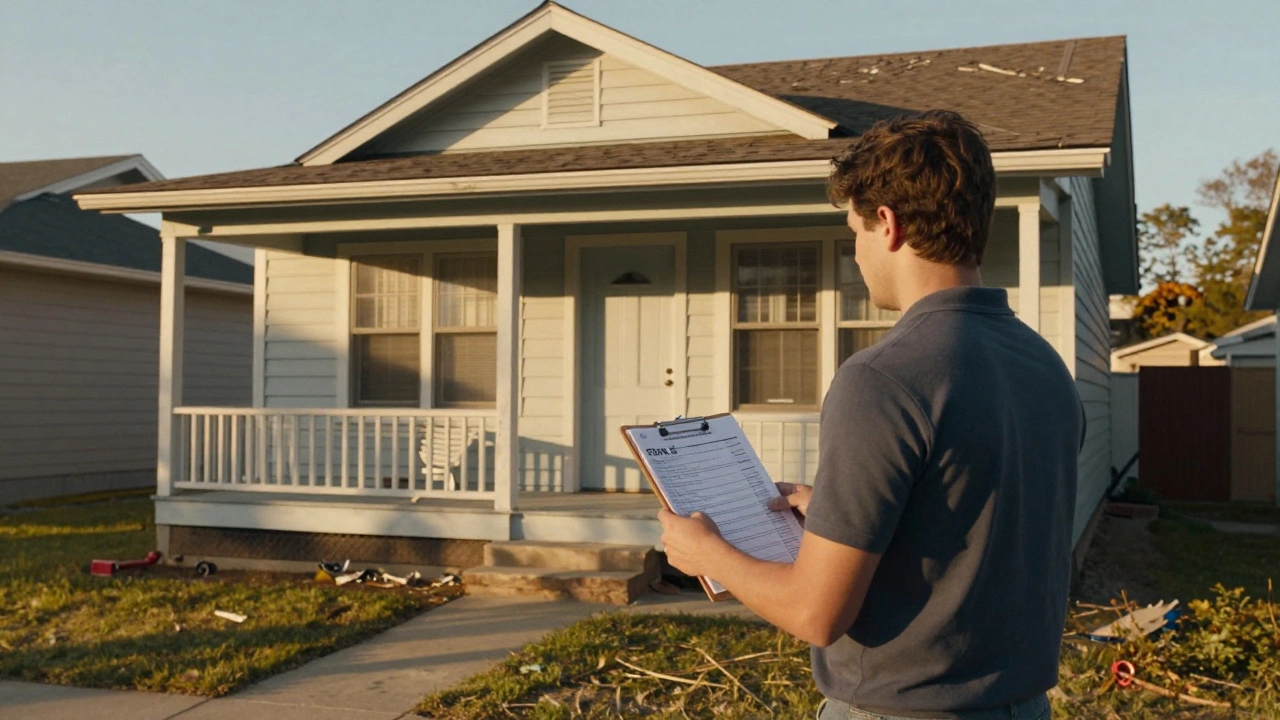
FHA Home Check Tool
Home Qualification Check
This tool helps you determine if your potential home meets basic FHA approval requirements. Based on common failure points, it will provide a preliminary assessment of your home's eligibility.
Check all conditions that apply to the property you're considering.
Home Qualifies for FHA Approval
This home meets basic FHA requirements. It's likely to pass the FHA appraisal and inspection process.
Note: This is a preliminary check. Always get a professional home inspection before making an offer.
Home Does Not Qualify for FHA Approval
This home has issues that could cause FHA loan rejection. The following items need to be resolved:
Required repairs:
- Remediate any lead-based paint issues
- Repair or replace the roof with at least 2 years of remaining life
- Fix water damage and remove mold
- Upgrade electrical systems to meet current codes
- Ensure all plumbing fixtures work properly
- Address structural issues
- Install required safety features
Your options if the home fails: 1) Ask seller to fix repairs, 2) Negotiate price reduction, or 3) Walk away from the deal.
Buying your first home is exciting-but if you’re relying on an FHA loan, not every house will do. The Federal Housing Administration doesn’t lend money directly, but it backs loans from private lenders. That backing gives lenders confidence to approve buyers with lower credit scores and smaller down payments. But here’s the catch: the house itself has to meet strict standards. If it doesn’t, your loan gets denied-even if you’re perfectly qualified.
Why FHA Approval Matters for First-Time Buyers
FHA loans are designed for people who can’t afford a 20% down payment. Many first-time buyers put down as little as 3.5%. That’s great-until you find a house that fails inspection. Suddenly, your dream home becomes a financial dead end. The FHA doesn’t just care about price or location. It cares about safety, structural soundness, and livability. If a house has peeling paint from before 1978, a broken water heater, or a roof with less than two years left, it won’t pass. And you won’t get your loan.
This isn’t about luxury. It’s about minimum habitability. The FHA wants to make sure you’re not buying a home that could cost you more in repairs than it’s worth-or worse, put your health at risk.
The Three Big Requirements for FHA Approval
Every FHA-approved home must pass three core checks: appraisal, inspection, and compliance. These aren’t optional. They’re built into the loan process.
- Appraisal: An FHA-approved appraiser visits the home to estimate its market value. But they don’t just look at square footage. They check for health and safety hazards.
- Inspection: This isn’t a home inspection you hire yourself. It’s a mandatory FHA inspection that flags issues that could affect safety or structural integrity.
- Compliance: The home must meet the FHA’s Minimum Property Requirements (MPRs), which cover everything from electrical systems to water access.
These aren’t suggestions. They’re deal-breakers.
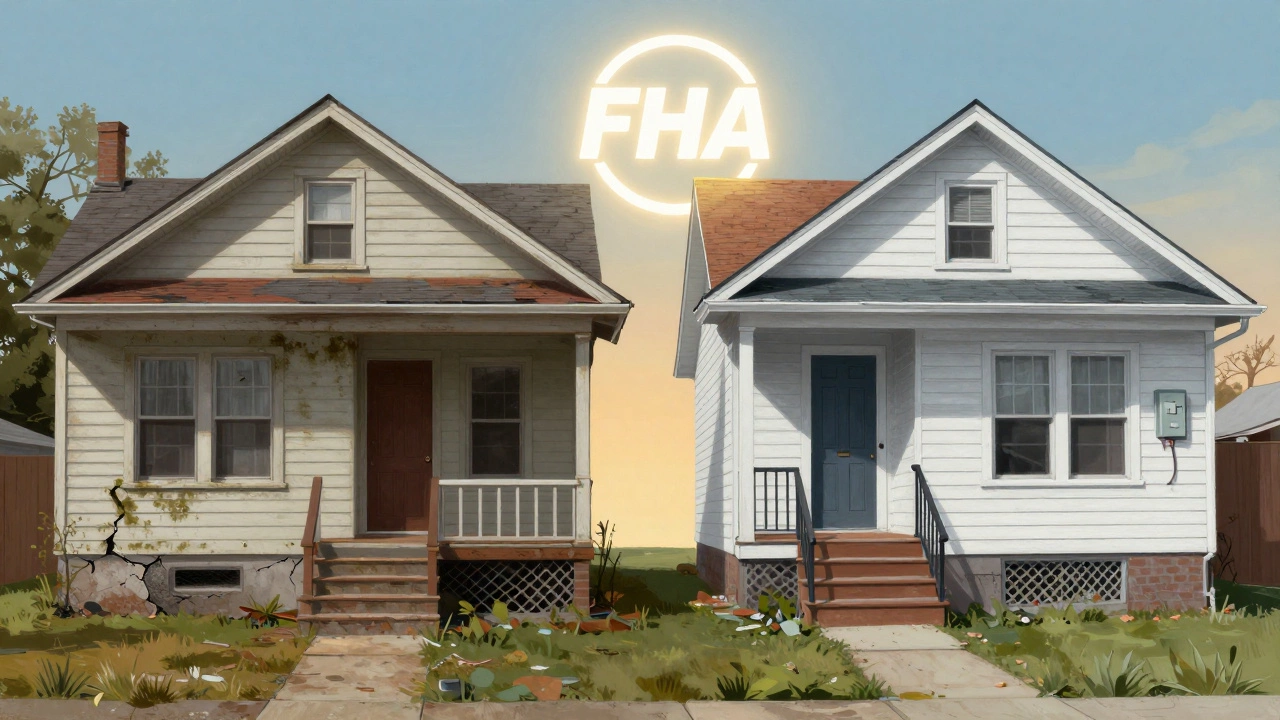
What Makes a House Fail FHA Approval?
Many first-time buyers are shocked when their dream home gets rejected. Here’s what commonly causes failure:
- Lead-based paint: Homes built before 1978 must have no chipping, peeling, or flaking paint on interior or exterior surfaces. If found, the seller must remediate it before closing.
- Roof condition: The roof must have at least two years of remaining useful life. If it’s leaking or nearing the end of its lifespan, repairs are required.
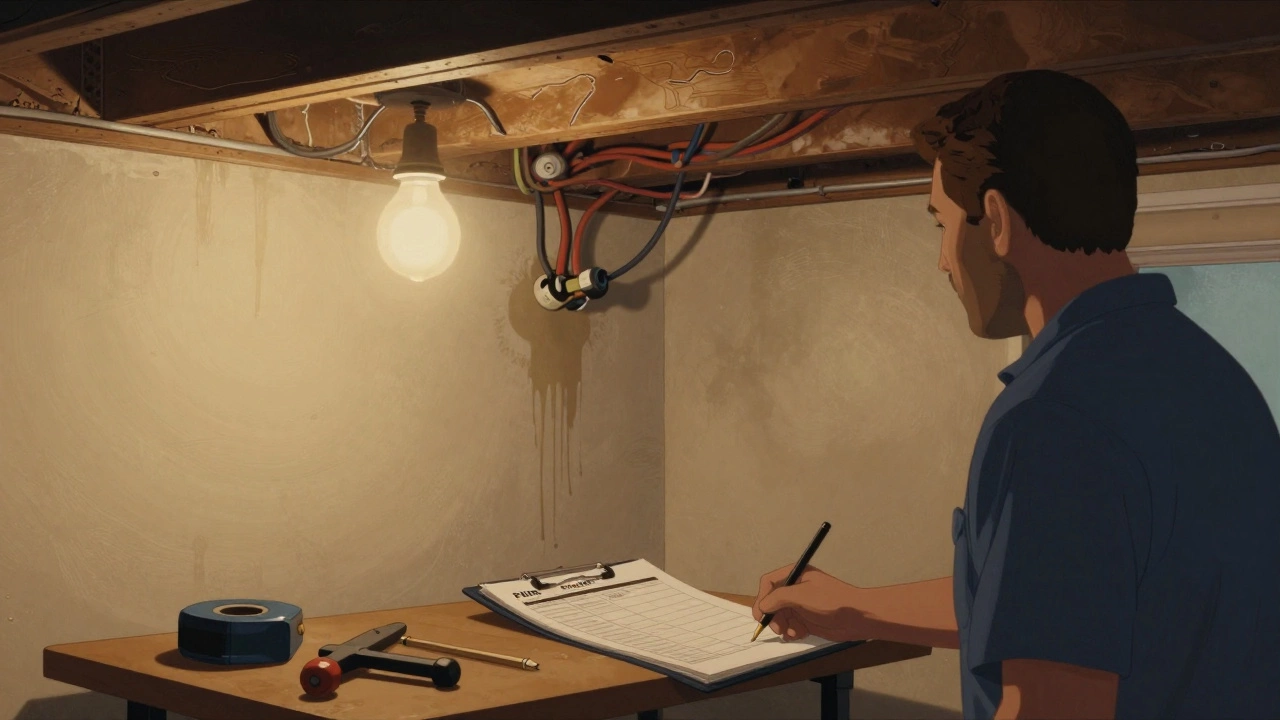
- Water damage: Mold, rot, or standing water in the basement or crawl space will trigger a failure. The FHA doesn’t want you living in a damp environment.
- Electrical systems: Knob-and-tube wiring, ungrounded outlets, or overloaded panels are red flags. The system must be safe and functional.
- Plumbing: No running water? No hot water? No working toilet? All of these are automatic fails. The home must have full plumbing.
- Structural issues: Cracked foundations, sagging floors, or damaged load-bearing walls mean the house isn’t structurally sound.
- Missing safety features: Smoke detectors, carbon monoxide detectors, and handrails on stairs are required. If they’re missing, they must be installed.
Some issues are easy to fix-like replacing a broken window. Others, like foundation cracks, can cost thousands. That’s why buyers should always get a pre-inspection before making an offer on a home they think might be FHA eligible.
What Happens If the House Fails?
If the FHA appraisal comes back with required repairs, you have three options:
- Ask the seller to fix it: This is the most common path. Sellers often agree, especially in a buyer’s market. The repairs must be completed before closing, and the appraiser will do a re-inspection.
- Negotiate a price reduction: If the seller won’t fix it, you can ask for a credit at closing to cover the cost. But you can’t use that money for anything else-it must go toward the approved repairs.
- Walk away: If the seller refuses and you can’t afford the repairs, you can cancel the contract without penalty-assuming you had a contingency clause.
Don’t assume the seller will fix everything. Some sellers, especially those selling “as-is,” won’t budge. That’s why it’s smart to look at homes that are already FHA-approved or recently renovated.
Where to Find FHA-Approved Homes
You can’t search for “FHA-approved homes” on Zillow or Realtor.com. But you can find them by asking the right questions:
- Ask your real estate agent: “Which homes in this area have passed FHA appraisal recently?”
- Look for homes built after 2000-older homes are more likely to have outdated systems.
- Check for recent renovations. Homes with updated roofs, plumbing, or electrical systems are more likely to pass.
- Ask if the seller has a home warranty. It often means they’ve already addressed common issues.
Some housing agencies and nonprofit groups maintain lists of FHA-eligible homes, especially in lower-income neighborhoods. Your lender may have access to these too.
FHA vs. Conventional Loans: What’s Different?
Conventional loans don’t have the same strict rules. A home with an old furnace or cracked windows might still qualify for a conventional loan if the buyer is willing to accept the risk. FHA loans don’t allow that. The government is protecting you-not just the lender.
That’s why FHA loans are better for first-time buyers with limited savings. But they come with trade-offs. You’ll pay mortgage insurance for the life of the loan if you put down less than 10%. And you can’t use FHA loans for investment properties or vacation homes.
But if you’re buying your first home to live in, and you need help with the down payment, FHA is often your best shot.
How to Prepare Before You Start Looking
Don’t wait until you’ve made an offer to find out if a house qualifies. Do this first:
- Get pre-approved for an FHA loan. This tells you your budget and shows sellers you’re serious.
- Ask your lender for a list of common FHA repair issues. Print it out.
- When you tour homes, bring the list. Check for missing smoke detectors, peeling paint, broken windows, or water stains.
- Work with an agent who knows FHA rules. Not all agents do.
Being prepared saves time, stress, and heartbreak.
Common Myths About FHA-Approved Homes
There’s a lot of misinformation out there. Let’s clear up the biggest myths:
- Myth: FHA loans only work for fixer-uppers. False. FHA loans work for move-in-ready homes too. In fact, most approved homes are in decent condition.
- Myth: All new construction is automatically approved. Not always. New homes still need to meet MPRs. If the builder skipped permits or used substandard materials, it can fail.
- Myth: You can buy a mobile home with an FHA loan. Only if it’s a manufactured home built after June 15, 1976, and meets HUD code standards. Trailers and RVs don’t count.
- Myth: FHA loans are only for low-income buyers. No income cap exists. But the home’s value must be within FHA loan limits for your area.
Don’t let myths stop you from exploring your options.
What You Should Do Next
If you’re a first-time buyer, here’s your action plan:
- Check your credit score. You need at least 580 for the 3.5% down payment. If it’s below 580, you’ll need 10% down.
- Get pre-approved by an FHA-approved lender.
- Start looking at homes with your agent-but keep the FHA checklist handy.
- Always get a pre-inspection before making an offer.
- Be ready to negotiate repairs or walk away if needed.
FHA approval isn’t a barrier. It’s a safety net. It keeps you from buying a home that could turn into a money pit. And for first-time buyers who don’t have the experience-or the savings-to handle surprise repairs, that’s worth more than you think.
Can a house with mold be FHA approved?
No. Mold that affects the structural integrity or health of the home is a mandatory repair. The FHA requires the source of moisture to be fixed and the mold removed before approval. If the mold is extensive, the home will fail the appraisal until remediation is complete and verified.
Do FHA loans require a home inspection?
The FHA doesn’t require a separate home inspection, but it does require a mandatory FHA appraisal that includes a safety and structural review. This is not the same as a full home inspection. Buyers are strongly encouraged to hire their own inspector to uncover issues beyond FHA’s minimum standards.
Can I use an FHA loan for a duplex?
Yes, if you plan to live in one unit. FHA loans allow 1- to 4-unit properties as long as the buyer occupies one of them as their primary residence. The property must still meet all FHA Minimum Property Requirements.
What’s the maximum FHA loan amount in 2026?
FHA loan limits vary by county. In most areas, the 2026 limit is $524,225 for a single-family home. In high-cost areas like Auckland, the limit can be as high as $1,209,750. Your lender can confirm the exact limit for your location.
How long does an FHA appraisal take?
An FHA appraisal usually takes 5 to 10 business days. If repairs are needed, the re-inspection adds another 3 to 7 days. Plan ahead-delays here can push back your closing date.