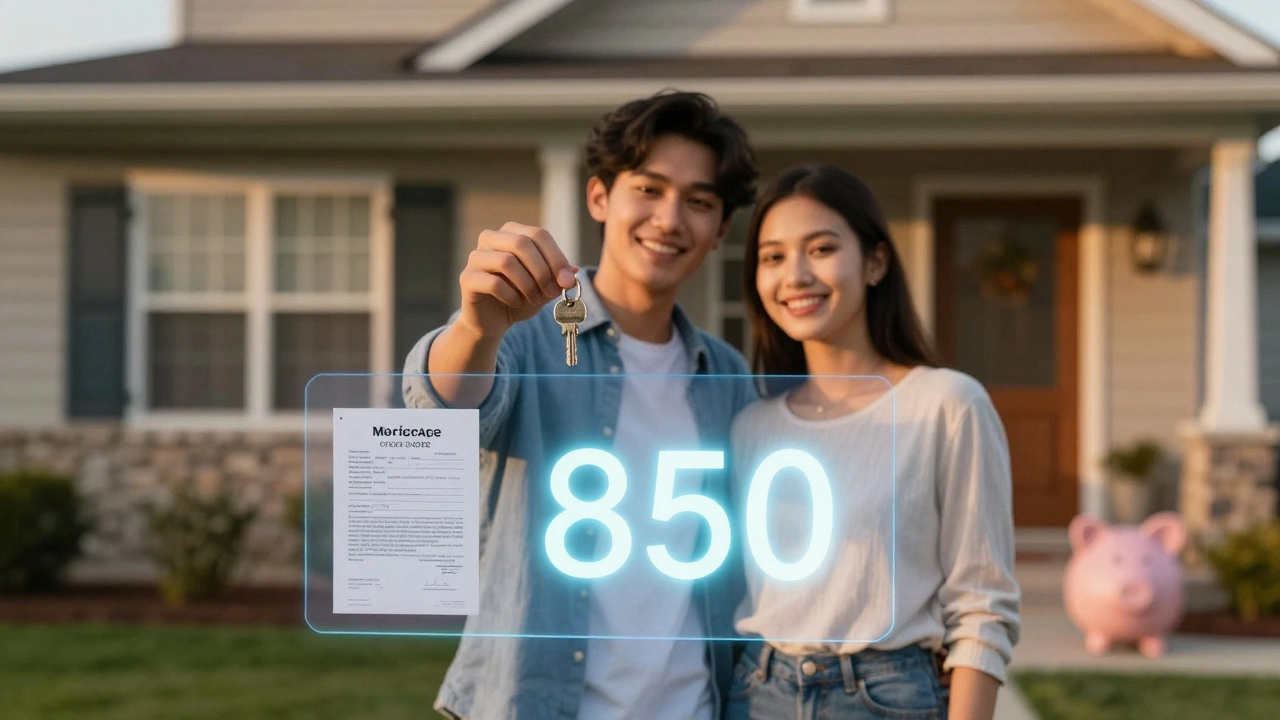
Perfect Credit Score: What It Really Takes to Get Approved for a Home
When people talk about a perfect credit score, a numerical rating that shows how reliably you repay debt, typically ranging from 300 to 850. Also known as excellent credit, it’s the silent gatekeeper to home loans, lower interest rates, and better terms. But here’s the truth: no lender cares if your score is 800 versus 780. What they care about is whether you’ve paid on time, kept debt low, and have a history that proves you won’t disappear with their money.
A credit score, a three-digit number based on your borrowing behavior, used by lenders to assess risk isn’t the only thing that matters. Your down payment, the upfront cash you put toward a home purchase matters just as much. A 20% down payment can make up for a score that’s good but not perfect. And if you’re a first time buyer, someone purchasing their first home, often eligible for special loan programs, lenders have more flexibility—they’re used to seeing younger borrowers with shorter credit histories. What they want to see is stability: steady income, no recent missed payments, and debts that don’t swallow your paycheck.
Many think you need a perfect credit score to buy a $300k house or qualify for an FHA loan, but that’s not how it works. A score of 680 or higher gets you in the door in most cases. What pushes you into the best rates is a combination: low debt, a solid income, and a clean payment record over at least two years. If you’ve got a 750 score but $40k in credit card debt, you’ll still get turned down. On the flip side, someone with a 720 score, $5k in debt, and a $70k salary? They’re the kind of borrower lenders love.
Don’t waste time chasing a 800 score if you’re trying to buy now. Focus on what actually moves the needle: pay bills on time, keep credit card balances under 30% of your limit, and don’t open new accounts right before applying. Those are the real levers. The rest is noise.
Below, you’ll find real advice from people who’ve been there—how to fix a low score, what lenders actually check behind the scenes, and why some first-time buyers with average scores still walk away with the keys. No fluff. Just what works.