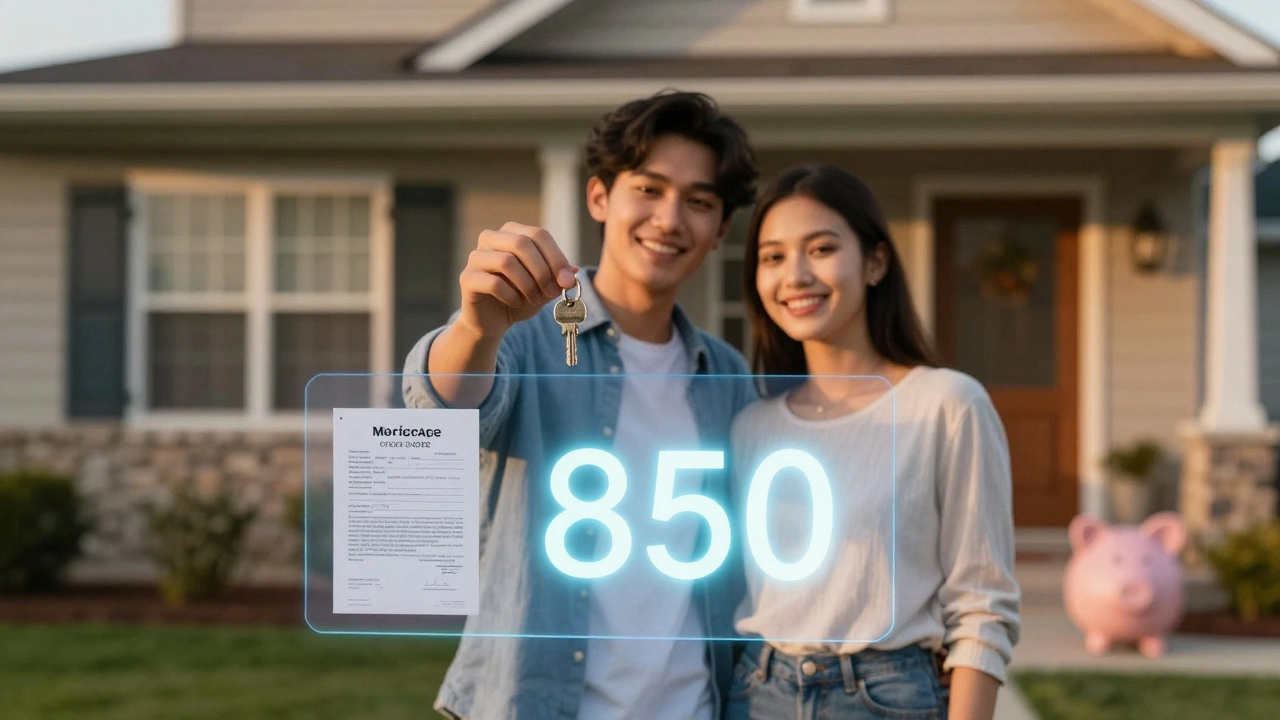
Credit Score Impact Calculator
Estimated Mortgage Payments
Key Insight: The article explains that once you reach 800+ credit score, you're already getting the lowest rates available. Going from 800 to 850 saves you very little.
For example, with a $300k loan, the difference between 800 and 850 scores is only about $12/month ($1,440 total over 10 years).
Score Comparison
| Credit Score | Interest Rate | Monthly Payment | Total Interest |
|---|---|---|---|
| 740 | 6.25% | $1,817.00 | $353,144.53 |
| 800 | 5.80% | $1,734.67 | $324,481.00 |
| 850 | 5.65% | $1,716.83 | $318,058.80 |
Most people think a credit score of 850 is the highest possible. But what if you could go higher? Can you actually hit a 900 credit score? And if you can, does it even matter when you’re trying to buy your first home?
There’s no such thing as a 900 credit score - here’s why
The two most common credit scoring models in the U.S., FICO and VantageScore, both cap their scores at 850. That’s it. There’s no 900. No 875. No 899. The system was designed this way on purpose. A score of 850 already puts you in the top 1% of borrowers. Lenders don’t need to see higher numbers because anyone with an 850 is already getting the best rates, lowest fees, and easiest approvals.
Some older or niche scoring models might use different ranges - like 300 to 900 - but those aren’t used by mortgage lenders, credit card issuers, or auto loan companies. If you see a website claiming you can get a 900 credit score, it’s either misleading or referring to a model that doesn’t matter in real life.
So if you’re a first-time homebuyer chasing a 900, stop. You’re chasing a ghost. What you should be chasing is an 800+ score. That’s the real target.
What does an 850 credit score actually get you as a first-time buyer?
Let’s say you’re applying for a $300,000 30-year fixed mortgage. With a credit score of 740, you might get a rate around 6.25%. With a score of 800, you’re looking at 5.8%. With an 850? You’re likely to land at 5.65% - maybe even lower if you’re working with a lender who gives extra discounts for top-tier scores.
That might not sound like much, but over 30 years, that 0.6% difference saves you over $20,000 in interest. That’s enough to cover closing costs, new furniture, or even a down payment boost.
But here’s the catch: once you’re above 780, the rate doesn’t drop much more. You don’t get a better rate at 850 than you do at 800. The system is designed to reward excellent credit, not perfect credit. So if you’re spending months trying to squeeze out those last 20 points, you’re wasting time.
What actually builds an 800+ credit score?
There are five things that matter - and only five. Everything else is noise.
- Payment history (35%): You must have 10+ years of on-time payments. One late payment in the last two years can drop you from 800 to 720. No exceptions.
- Credit utilization (30%): Keep your total balances under 5% of your total credit limits. If you have $50,000 in credit, don’t carry more than $2,500 in debt at any time. Paying off your card in full every month isn’t enough - you need to pay it before the statement date.
- Credit age (15%): The average age of your accounts needs to be over 7 years. Opening a new card to get a bonus? That will drag your average age down. Keep old accounts open, even if you don’t use them.
- Credit mix (10%): You need at least two types of credit. A credit card and an auto loan? Good. A credit card and a student loan? Fine. But don’t take out a loan just to check this box. It’s not worth the debt.
- New credit (10%): No hard inquiries in the last 12 months. If you’re planning to buy a home in six months, don’t apply for a new credit card, even if it has a 5% cashback offer.
Most people with 800+ scores have had credit for 15+ years. They’ve never missed a payment. They pay off their cards before the statement closes. They don’t chase rewards. They don’t open new accounts. They’re boring. And that’s exactly what makes them qualified for the best mortgage rates.

Why chasing a 900 score hurts first-time buyers
There’s a dangerous myth out there: “If I just get my score to 900, I’ll get the lowest rate ever.” That myth causes people to delay buying a home for years. They wait. They avoid using credit. They pay off every debt - even their student loans - just to “perfect” their score.
Here’s what happens: they turn 30, still renting, and realize they’ve missed out on $50,000 in home equity growth. Meanwhile, their friends who bought at 25 with a 760 score are now sitting on $180,000 in equity.
Waiting for perfection is the biggest mistake first-time buyers make. You don’t need a perfect score to get a great deal. You just need a good one. And you can get that in 12-18 months with focused effort.
What to do instead: The 12-month plan to hit 800+ before buying
If you’re serious about buying your first home, here’s your real plan:
- Month 1-3: Get all past due accounts current. If you have collections or late payments, pay them off. Ask for goodwill deletions. Don’t just pay - ask for removal.
- Month 4-6: Lower your credit utilization. Pay down balances to under 5% of your limits. Use a credit card for small purchases and pay it off before the statement closes.
- Month 7-9: Stop applying for new credit. No credit cards, no personal loans, no furniture financing. Even a single hard inquiry can cost you 5-10 points.
- Month 10-12: Check your credit report for errors. Dispute anything wrong - old accounts you didn’t open, duplicate entries, incorrect balances. The average person has at least one error on their report.
After 12 months, you’ll likely be at 780-820. That’s enough to lock in the best mortgage rates. You don’t need to wait longer.

What lenders really care about - beyond your score
Even with an 850 score, you can still get denied for a mortgage if your income is unstable, your debt-to-income ratio is too high, or your down payment is too small. Your credit score is just one piece.
Lenders look at:
- Debt-to-income ratio (should be under 36%)
- Down payment size (20% avoids PMI, but 3-5% is fine with FHA loans)
- Employment history (2+ years in the same field)
- Reserves (3-6 months of payments saved in the bank)
If your score is 800 but you’re working freelance with no tax returns, you’ll still struggle. If your score is 760 but you’ve saved 20% and have steady income, you’ll get approved with better terms than someone with 850 and no savings.
Don’t fixate on the number. Fixate on the whole picture.
Bottom line: Focus on 800, not 900
A 900 credit score doesn’t exist in the real world. It’s a myth created by websites selling credit repair services. The real goal is an 800+ score - and that’s achievable for most first-time buyers in under a year.
Stop chasing perfection. Start building stability. Pay your bills on time. Keep your balances low. Don’t open new accounts. Check your report for errors. Save for a down payment. That’s how you become a qualified homebuyer - not by hitting a number that doesn’t exist, but by doing the quiet, consistent work that lenders actually reward.
Your first home isn’t waiting for a 900 score. It’s waiting for you to stop waiting.
Can you really get a 900 credit score?
No, you cannot get a 900 credit score with the scoring models used by mortgage lenders. The highest possible score on FICO and VantageScore is 850. Any website claiming otherwise is either mistaken or using an outdated or irrelevant scoring model that lenders don’t consider.
Is 850 the best credit score for buying a house?
Yes, 850 is the highest possible score and guarantees you the absolute best mortgage rates. But you don’t need it. Once your score is above 780, you’re already getting the lowest rates lenders offer. Spending extra time to go from 800 to 850 won’t lower your rate further - but it might delay your home purchase.
How long does it take to get an 800 credit score?
It typically takes 5-7 years of consistent, responsible credit use to reach 800. But if you’re starting from scratch or have a damaged score, you can get to 780+ in 12-18 months by focusing on payment history, low credit utilization, and avoiding new credit applications.
Does paying off debt faster improve my credit score?
Yes - but only if it lowers your credit utilization. Paying off a credit card balance before the statement date can drop your utilization from 50% to 5%, which can boost your score by 50+ points. Paying off a car loan early doesn’t help your score - and might even hurt it by reducing your credit mix.
Should I close old credit cards to improve my score?
No. Closing old cards shortens your credit history and increases your utilization rate. Even if you don’t use them, keep them open. A $0 balance on an old card helps your score. Closing it removes that benefit and can drop your score by 20-40 points.