Shared Ownership Cost Calculator
Estimate Your Costs
Your Estimated Annual Costs
Rent Costs: $
Service Charges: $
Mortgage: $
Total Annual Cost: $
Rent Increase (Annual):
Service Charge Increase (Annual):
Cost vs. Full Ownership: $
Staircasing Cost (if applicable): $
Key Insight: Your total costs include both mortgage payments and ongoing rent that does not build equity. Over time, these costs often exceed traditional renting.
Important Notes:
- Rent increases are typically based on RPI (e.g., 8.5% in Auckland 2023)
- Service charges often rise 6.2% annually (Auckland 2024 data)
- Staircasing adds $500-$1,000 per step for valuations and fees
- Only 22% of homeowners reach full ownership within 10 years
When you hear "shared ownership," you might picture a path to owning a home without needing a huge deposit. And sure, it works for some people. But like any deal that sounds too good to be true, there are hidden costs, tricky rules, and surprises waiting to trip you up. If you're considering shared ownership in New Zealand or anywhere else, you need to know what you're getting into - not just the perks, but the real downsides.
You Don’t Own the Whole Thing
Shared ownership means you buy a portion of the property - usually between 25% and 75% - and pay rent on the rest. That rent goes to a housing association or council. Sounds fair? Not always. The problem? You never fully own your home. Even if you buy 90%, you’re still stuck with someone else’s rules. You can’t make major changes without permission. Want to knock down a wall? Install solar panels? Paint the exterior? You’ll need written approval. And that process? It can take weeks. Meanwhile, your neighbors who own outright can renovate on a whim.
Rent Increases Are Unpredictable
The rent you pay on the portion you don’t own isn’t fixed. It usually goes up every year, based on inflation or a set percentage - often tied to the Retail Price Index (RPI). In 2023, one Auckland shared ownership homeowner saw their rent jump 8.5% in a single year. That’s more than double the general inflation rate. Over time, those increases add up. After five years, some people are paying nearly as much in rent as they would for a full market-rate lease. You thought you were getting into homeownership. Instead, you’re paying two bills: a mortgage and a rent bill. And the rent part? It doesn’t build equity. It just disappears.
It’s Hard to Sell - or Even Move
Selling your share sounds simple: find a buyer, get it approved, and walk away. Except it’s not. Housing associations have the right to find a buyer first. They get a 12-week window to match any offer you get. If they don’t, you can list it publicly. But here’s the catch: your pool of buyers is tiny. Only people who qualify for shared ownership can buy your share. That means fewer buyers, slower sales, and often lower prices. One woman in Wellington tried to sell her 50% share after three years. She got three offers. Two were below market value. The third came from a buyer who couldn’t get financing. She ended up stuck for another year.
Service Charges Can Blow Up
On top of rent and mortgage, you’ll pay service charges. These cover things like building insurance, grounds maintenance, lift repairs, or communal heating. Sounds reasonable? Until the bill hits $1,200 a year - and keeps rising. In 2024, a study of 200 shared ownership homes in Auckland found that service charges increased by an average of 6.2% annually, far outpacing wage growth. Some residents paid more in service charges than their monthly mortgage. And there’s no cap. No law says they can’t double next year. You’re stuck with it because you can’t sell easily.

You Can’t Get a Mortgage Easily
Lenders don’t love shared ownership. Why? Because the property isn’t fully yours. Many banks won’t touch it. Others charge higher interest rates or demand bigger deposits. One Auckland couple applied for a mortgage on a 50% share. Five lenders turned them down. The sixth offered a rate 1.8% higher than the standard mortgage. That’s $300 extra a month on a $500,000 home. Over 25 years? That’s over $90,000 in extra interest. You thought shared ownership was the way to get in. Instead, you’re paying more to borrow than someone buying outright.
Staircasing Is Not a Free Ride
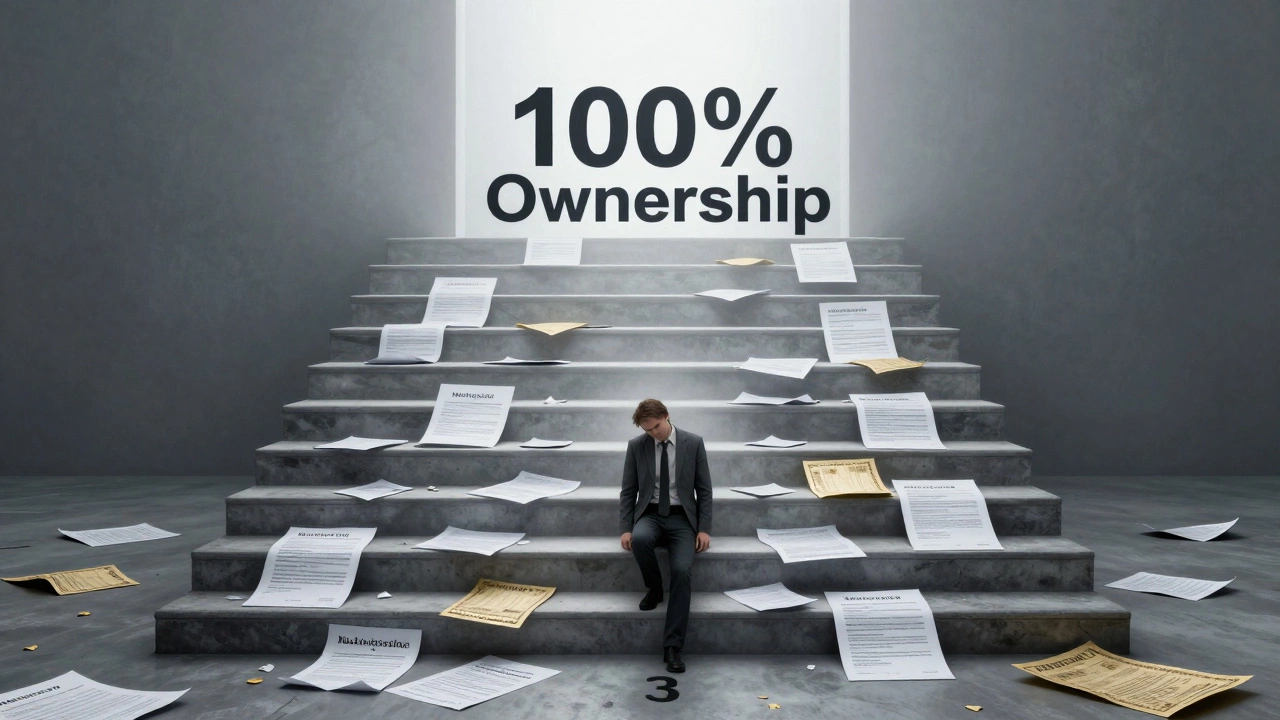
"Staircasing" is when you buy more shares over time - eventually owning 100%. Sounds great. But each time you staircase, you pay for a new valuation. That’s $500-$1,000 per go. Plus legal fees, lender fees, and sometimes even stamp duty (depending on your region). If you staircase twice, you’re out $2,000-$3,000 before you even pay more for the share. And the price of the next share? It’s based on today’s market value. If property prices rise, your cost to buy more goes up too. You’re not buying equity - you’re buying into a rising price ladder.
There’s No Guarantee You’ll Ever Own It All
Some people think staircasing is inevitable. It’s not. You need to qualify financially each time. If your income drops, you lose your job, or interest rates spike, you can’t afford the next step. You’re stuck in a limbo: not fully owned, not fully rented, paying two bills, with no clear path forward. A 2025 survey in New Zealand found that only 22% of shared ownership homeowners managed to staircase to 100% ownership within 10 years. The rest? They’re still paying rent on half their own home.
You’re Locked In - Literally
Shared ownership agreements often include clauses that prevent you from renting out your share - even if you need to move for work. If you’re transferred overseas or need to relocate, you can’t sublet. You either sell (which is hard) or walk away and keep paying rent and mortgage on an empty home. One man in Christchurch got a job in Singapore. He couldn’t rent out his shared ownership flat. He had to pay both his mortgage and rent for 18 months while he was away. That’s over $24,000 lost.
The Market Is Not Transparent
There’s no public data on resale prices for shared ownership units. You can’t compare what others paid. You can’t see trends. You’re flying blind. Real estate agents don’t track these sales. Online listings rarely include them. That means you’re at the mercy of the housing association’s pricing. And they’re not required to be fair. One buyer in Hamilton paid $320,000 for a 60% share of a property that had sold for $350,000 full price just two years earlier. The association valued it at $530,000 - making his share $318,000. He had no way to challenge it.
It’s Not the Path to Wealth
Homeownership is often sold as a way to build wealth. But shared ownership? It’s a wealth trap. You’re not building equity as fast as you think. You’re paying rent on part of your home. You’re paying fees to upgrade your share. You’re paying more for your mortgage. And when you finally sell? You might not break even after all the costs. In contrast, someone who bought a modest rental property outright in 2020 saw a 38% return by 2025. The shared owner? They broke even - after paying $17,000 in fees and $14,000 in rent increases.
Shared ownership isn’t a scam. But it’s not a shortcut either. It’s a complex, expensive, and restrictive alternative to renting - with none of the freedom of true ownership. If you’re considering it, ask yourself: Are you buying a home? Or just signing up for a long-term financial puzzle?
Can you ever fully own a shared ownership home?
Yes, but it’s not guaranteed. You can buy more shares over time through a process called staircasing, usually up to 100%. However, each step requires a new valuation, legal fees, and lender approval. Many people never reach full ownership because they can’t afford the rising costs or don’t qualify financially when it’s time to buy more.
Do you pay rent on a shared ownership property?
Yes. Even if you own 75% of the property, you still pay rent on the remaining 25% to the housing association. This rent increases annually, often tied to inflation, and doesn’t contribute to your equity. It’s a recurring cost that many forget to factor in when budgeting.
Are service charges mandatory in shared ownership?
Yes. Service charges cover maintenance of shared areas like lifts, gardens, security, and building insurance. These charges are non-negotiable and typically rise each year. In some cases, they’ve increased faster than wages, making them a major financial burden over time.
Can you rent out your shared ownership home?
Almost always, no. Most shared ownership agreements prohibit subletting. If you need to move for work or personal reasons, you can’t rent out your share. You’ll still be responsible for mortgage payments and rent - even if you’re not living there.
Is shared ownership cheaper than renting?
Sometimes, but not always. While your mortgage payment might be lower than full rent, you’re still paying rent on the portion you don’t own - plus service charges and higher mortgage rates. Many people end up paying more per month than they would in a standard rental. The real cost isn’t just monthly payments - it’s the hidden fees, limited flexibility, and long-term financial risk.