Shared Ownership Calculator
Calculate Your Shared Ownership Costs
Enter your desired ownership share and property value to see monthly costs and equity growth.
Your Shared Ownership Breakdown
When you hear "shared ownership," you might think it means splitting a house with a stranger. But in New Zealand and many other countries, it’s a structured way to get into homeownership without needing a full deposit. Instead of buying 100% of a property, you buy a portion-like 25%, 50%, or 75%-and pay rent on the rest. This isn’t a loophole or a gimmick. It’s a government-backed program designed to help people who earn too much for social housing but too little to buy outright.
What Exactly Is an Ownership Share?
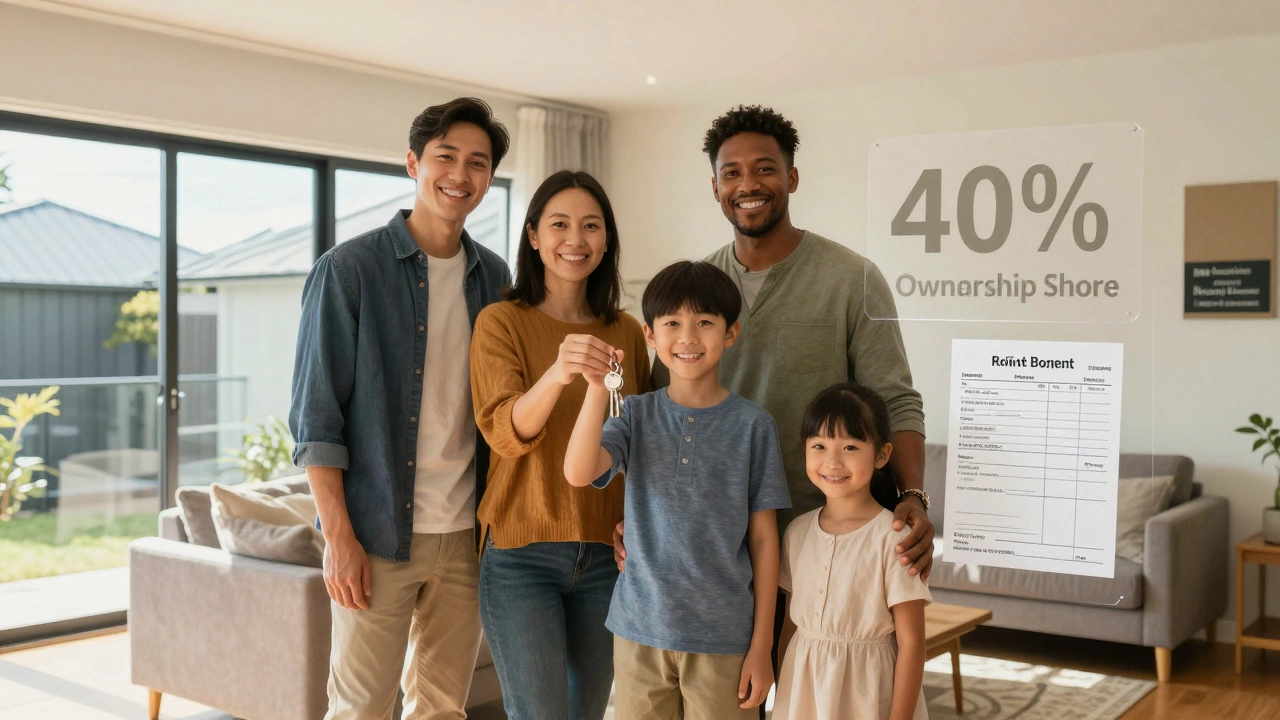
An ownership share is the percentage of a property you legally own. The rest is owned by a housing association or public body, and you pay rent on that portion. For example, if you buy a 40% share of a $600,000 home, you own $240,000 of it. The remaining $360,000 is owned by the housing provider, and you pay monthly rent on that part-usually around 2.75% of the value per year.
Here’s the key: your mortgage only covers the share you buy. So instead of needing a $120,000 deposit for a full $600,000 home, you might only need $24,000 for a 40% share. That makes homeownership possible for people on middle incomes-like teachers, nurses, or tradespeople-who’d otherwise be locked out.
How Do You Buy Your Share?
You don’t just walk into a real estate office and pick a house. Shared ownership homes are listed through approved housing associations like Housing New Zealand a government agency that manages affordable housing programs in New Zealand, including shared ownership schemes, or private providers partnered with the government. These homes are often new builds or redeveloped properties, and they’re priced below market value because you’re not buying the full equity.
To qualify, you typically need to:
- Be a first-time buyer, or have previously owned but can’t afford to buy again
- Have a household income under $120,000 (in Auckland, higher elsewhere)
- Pass a credit check and mortgage affordability test
- Not own any other property
Once approved, you apply for a shared ownership mortgage. Not every lender offers this, but major banks like ANZ a New Zealand-based bank that provides shared ownership mortgages with flexible terms and Westpac a financial institution offering shared ownership loans with lower deposit requirements have specific products for it. You’ll need at least a 5% deposit on your share-not the full property.
What Happens When You Pay Rent?
The rent you pay on the unsold share isn’t wasted. It’s usually lower than market rent because it’s subsidized. For a 60% share in a $600,000 home, you’d pay rent on the 40% you don’t own. That’s $240,000 × 2.75% = $6,600 per year, or about $550 a month. Compare that to renting the whole house, which could cost $3,500-$4,500 a month in Auckland.
And here’s the twist: rent goes up annually, but only by a set formula-usually the Consumer Price Index (CPI) plus 0.5%. So if inflation is 3%, your rent might rise by 3.5%. This keeps it predictable, unlike private rentals where landlords can hike prices anytime.
Can You Buy More Shares Later?
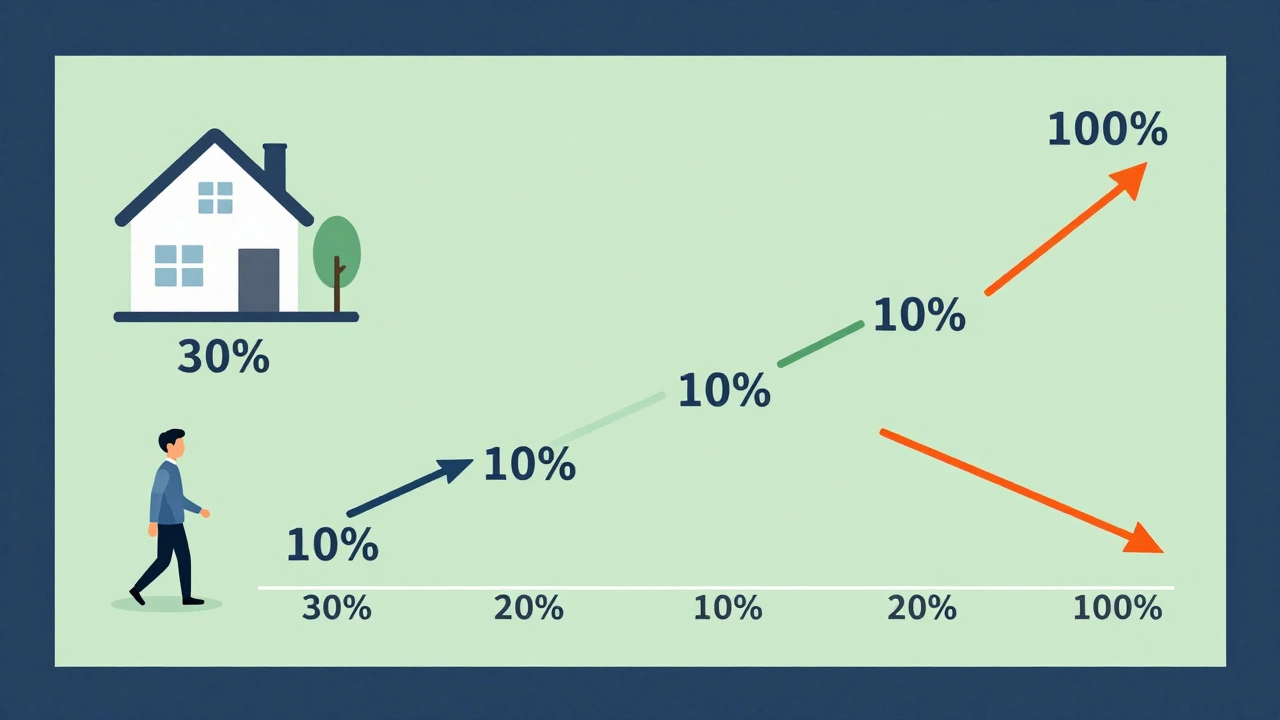
Yes. This is called staircasing. You can buy additional shares in increments-often 10% at a time-until you own 100%. Each time you staircase, you get a new valuation of the property. You pay for the extra share at today’s market price, not what you originally paid.
Let’s say you started with a 30% share in a $500,000 home. Three years later, the home is worth $580,000. If you want to buy another 20%, you pay 20% of $580,000 = $116,000. You don’t get credit for the home’s rise in value-you’re buying into the current market. But you also don’t pay the full price. You’re only paying for the share you’re adding.
Most schemes allow you to staircase up to 100%. Once you do, you own the home outright. No more rent. Just mortgage payments (if you still have a loan) and property taxes.
What Are the Downsides?
It’s not perfect. Here’s what you need to watch out for:
- Valuation costs-every time you staircase, you pay for a professional valuation. That’s $500-$800 each time.
- Mortgage limits-some lenders won’t finance beyond 95% ownership. You might need to save extra cash to cover the final 5%.
- Selling restrictions-if you want to sell before owning 100%, the housing association usually has first refusal. They can buy your share or find a buyer who also qualifies for shared ownership.
- Service charges-you’ll pay monthly fees for building maintenance, insurance, and communal areas. These aren’t optional.
And if you fall behind on rent or mortgage payments, the housing association can take action faster than a private landlord. This isn’t a trap-it’s a safety net. But it means you need to be extra careful with your budget.
Who Benefits Most From Shared Ownership?
This model works best for people who:
- Plan to stay in the home for 5+ years
- Have stable income and can handle rising rent and mortgage payments
- Don’t mind being tied to a specific housing provider
- Want to build equity without a huge upfront cost
It’s not ideal if you expect to move in 2-3 years. The costs of valuation, legal fees, and potential resale restrictions make short-term ownership expensive.
It’s also not a get-rich-quick scheme. You won’t flip the property for profit. But you will build wealth slowly-by paying down your mortgage and gaining more equity over time.
How Does It Compare to Renting or Buying Full?
Here’s a quick breakdown:
| Factor | Full Ownership | Shared Ownership | Renting |
|---|---|---|---|
| Upfront Cost | $120,000+ deposit | $20,000-$40,000 deposit | $1,500-$3,000 bond |
| Monthly Payment | Mortgage only | Mortgage + rent | Rent only |
| Equity Growth | 100% | Proportional to share owned | None |
| Rent Increases | N/A | Controlled (CPI + 0.5%) | Unlimited (market rate) |
| Long-Term Cost | Lowest | Moderate | Highest |
Shared ownership sits in the middle. It’s more expensive than renting each month, but you’re building something valuable. It’s cheaper than full ownership upfront, but you’re still paying rent. Over 10 years, most people in shared ownership end up better off than renters-and often better off than those who tried and failed to enter the full market.
What Happens If You Want to Move?
If you own 100%, you can sell freely. But if you own, say, 70%, you have to offer your share back to the housing association first. They have 8 weeks to find a buyer who qualifies for shared ownership. If they can’t, you can list it publicly-but only to buyers who meet the same income and eligibility rules.
This means your resale market is smaller. You might not get top dollar. But you also won’t lose money. Because you own part of the home, you keep any increase in value on your share. So if the home goes up 20%, you get 20% of that gain on your portion.
Can You Use KiwiSaver?
Yes. In New Zealand, you can use your KiwiSaver first-home withdrawal to help pay for your initial share. You can also use it for stamp duty, legal fees, or even your mortgage deposit. This is one of the biggest advantages shared ownership has over traditional buying.
You need to have been in KiwiSaver for at least 3 years, and the property must be your primary residence. But if you’re eligible, this can cut your upfront cost by $10,000-$20,000.
Is Shared Ownership Right for You?
Ask yourself:
- Can I afford a mortgage on my share, plus rent on the rest, for the next 5 years?
- Do I plan to stay in this area long enough to staircase?
- Am I okay with rules, restrictions, and occasional paperwork?
- Do I want to build equity, even if it’s slow?
If you answered yes to most of these, shared ownership could be your best path to owning a home. It’s not a shortcut. But it’s one of the few real pathways left for middle-income earners in today’s housing market.
Can I buy 100% of a shared ownership home?
Yes. Most shared ownership schemes allow you to buy additional shares over time, a process called staircasing. You can usually buy in increments of 10% until you own 100%. Once you do, you no longer pay rent and fully own the property. Some lenders may require you to pay off your mortgage before reaching 100%, so check your terms.
Do I need a deposit for each staircasing purchase?
Yes. Each time you buy more equity, you’ll need to reapply for a mortgage or arrange financing for the new share. You’ll need a deposit-typically 5% to 10% of the value of the additional share you’re buying. You’ll also pay for a new property valuation and legal fees each time.
What happens if I can’t afford to staircase?
You don’t have to staircase at all. You can stay at your original share level indefinitely. Your rent will still be adjusted annually based on CPI, but you’re not forced to buy more. Many people choose this route, especially if their income doesn’t grow or interest rates rise too quickly.
Can I rent out my shared ownership home?
No. Shared ownership homes are for owner-occupiers only. You cannot rent out the property, even if you own 100%. This rule is strictly enforced to ensure the scheme stays available for those who need affordable housing. Violating this can lead to legal action or forced sale.
Are shared ownership homes only new builds?
Most are new builds, but some older properties are converted into shared ownership homes-especially in areas with housing shortages. These are usually refurbished and brought up to modern standards. The key is that the housing association owns the unsold share, regardless of the property’s age.