Shared Ownership Calculator
See how your costs change as you staircase to full ownership
Lower entry barrier than full ownership
Build equity while living in the property
Monthly payments often lower than market rent
Initial Investment
$0.00
Your upfront costs including deposit and fees
Monthly Payments
$0.00
Equity Growth
$0.00
Your ownership percentage increases over time
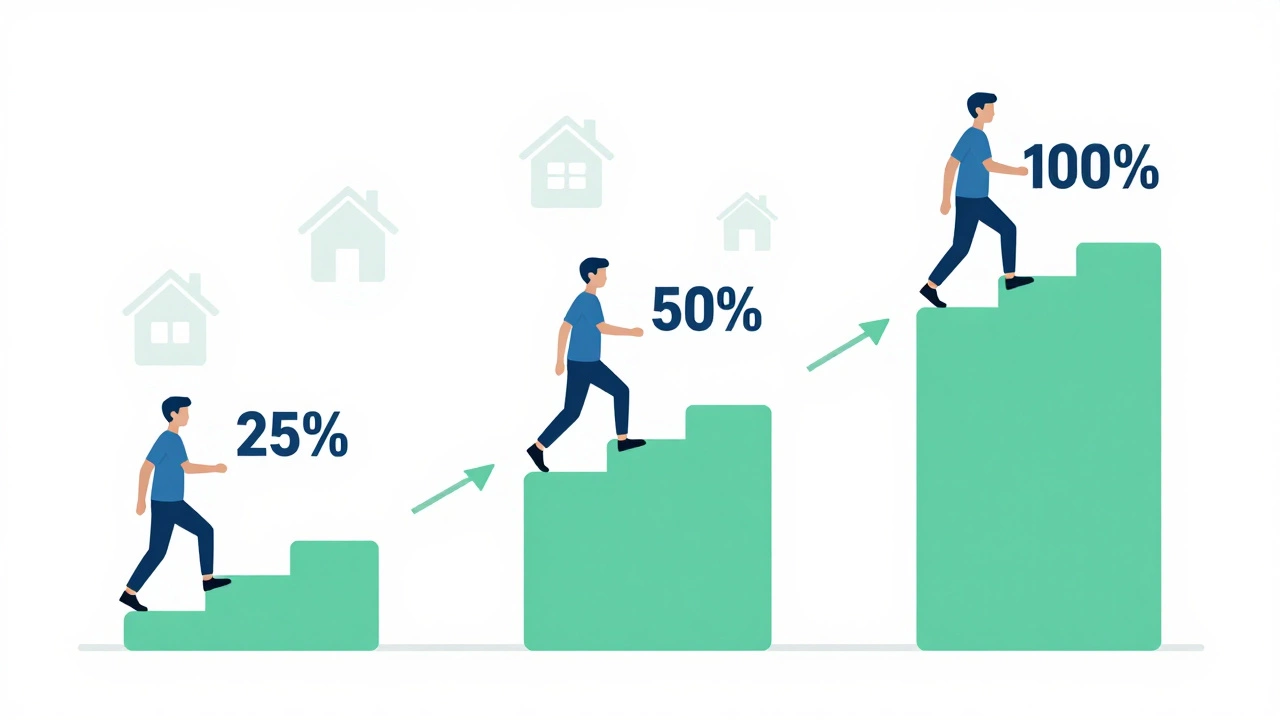
Staircasing opportunity: You can buy additional shares in 5-15% increments over time. As your ownership percentage increases, your rent decreases and you build equity in your home.
When you hear "shared ownership," you might think it means splitting a house with a friend or family member. But in New Zealand and the UK, it’s something more structured - and it’s becoming a real path to owning a home when prices feel out of reach. At its core, share of ownership is the percentage of a property you legally own, while a housing association or approved provider owns the rest. You pay rent on the part you don’t own, and you can buy more over time.
How Share of Ownership Works in Practice
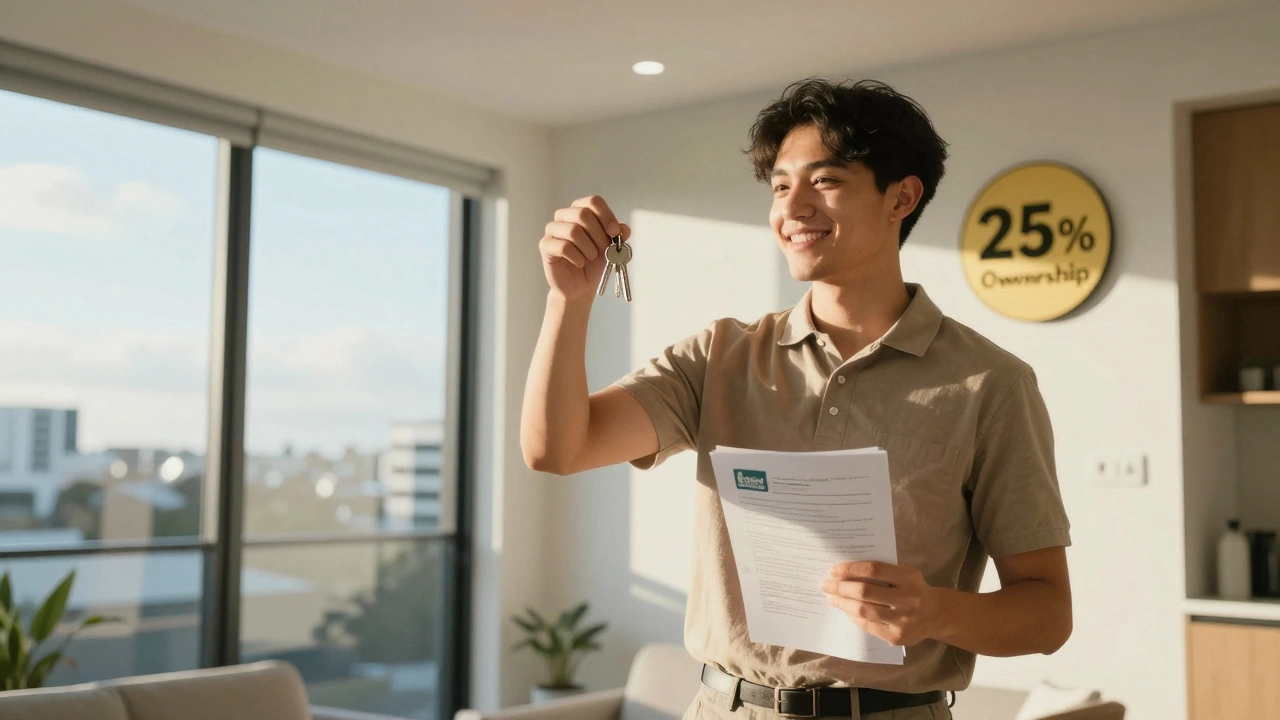
Let’s say you’re looking at a two-bedroom apartment in Auckland priced at $650,000. You can’t afford to buy it outright, but you have $40,000 saved. Under a shared ownership scheme, you might buy a 25% share - that’s $162,500. The housing association owns the other 75%. You take out a mortgage for your 25%, and you pay monthly rent on the 75% you don’t own. That rent is usually lower than market rent because it’s tied to the property’s value, not what you’d pay in a regular rental.
You’re still responsible for repairs, insurance, and service charges - just like any homeowner. But you’re not stuck. One of the biggest advantages? You can buy more shares later. This is called staircasing. After a year or two, if you’ve saved more or your income has gone up, you can buy another 10%, then another 15%, until you own 100%. At that point, you no longer pay rent. You’re a full homeowner.
Who Controls the Share of Ownership?
The housing association or registered provider sets the rules. They decide how much you can buy upfront, what the minimum share is (often 10% or 25%), and how staircasing works. You can’t just decide to buy 50% tomorrow - you need to apply, get a valuation, and go through a formal process. The valuation is done by a RICS-registered surveyor, and it’s binding. If the property value has gone up, your next share costs more. If it’s dropped, you might pay less - but that’s rare in growing markets like Auckland.
There’s also a cap. Most schemes let you buy up to 100%, but some limit it to 80% or 90%. Always check the lease agreement before signing. Some older schemes don’t allow full ownership, which can affect resale value and mortgage options later.
Why Share of Ownership Matters for First-Time Buyers
For many people, especially young workers, teachers, nurses, or public servants, buying a home feels impossible. In Auckland, the average house price is over $1 million. Even a small apartment can cost $600,000 or more. A share of ownership lowers the entry barrier. Instead of needing a 20% deposit on $1 million, you only need 5% on $162,500 - around $8,125. That’s doable with savings and a steady job.
It’s not just about money. It’s about stability. Unlike renting, where your landlord can sell or raise the rent, shared ownership gives you security. You can renovate, paint, install new flooring - you’re building equity. And if you need to move, you can sell your share. There’s a resale market. The housing association has the right of first refusal, but they’ll help you find a buyer who also qualifies for shared ownership.
What You Don’t Own - And What You Still Pay For
Just because you own 30% doesn’t mean you pay 30% of everything. You still pay full service charges, building insurance, ground rent, and maintenance fees - these are split based on your share. So if you own 25%, you pay 25% of the service charge. But you’re still responsible for internal repairs: leaking taps, broken appliances, damaged floors. The housing association handles the roof, walls, and structural stuff.
Some people get confused here. They think owning a share means they get a smaller say in decisions. That’s not true. You still get to vote in residents’ meetings, raise issues about building safety, and help shape how the property is managed. You’re a part-owner, not a tenant with fewer rights.
Common Misconceptions About Share of Ownership
One myth is that you can’t get a mortgage for shared ownership. That’s false. Most major banks and building societies in New Zealand offer shared ownership mortgages. You’ll need to work with a broker who understands the scheme - not every lender does. Another myth is that you’re stuck forever. You’re not. You can staircase to full ownership, or sell your share at any time.
Another misunderstanding? That shared ownership is only for low-income people. It’s not. Many middle-income earners use it to get a foot on the ladder. A nurse earning $80,000 a year might not qualify for a full mortgage on a $700,000 home - but they can easily afford a 50% share. It’s a tool, not a last resort.
What Happens When You Sell Your Share?
Selling your share isn’t like selling a regular house. You can’t just list it on Trade Me. You need to go through the housing association. They’ll get a valuation, then market it to other eligible buyers - usually people who also qualify for shared ownership. The sale price is based on the current market value of the whole property, multiplied by your share percentage.
For example: if your apartment is now worth $750,000 and you own 40%, your share is worth $300,000. You get that amount minus any fees (legal, admin, valuation). The housing association keeps a small fee - usually 1% to 2% - to cover their costs. That’s it. You walk away with your equity. No hidden penalties. No waiting for a buyer who can afford the full price.
Is Share of Ownership Right for You?
It’s a good fit if you want to own a home but can’t afford the full price. It’s not ideal if you plan to move in two years - the costs of buying, selling, and staircasing make short-term ownership expensive. It’s also not for people who hate paperwork. There’s a lease, a mortgage, rent payments, service charges, and staircasing applications. But if you’re steady, patient, and want to build long-term wealth, it’s one of the most realistic paths to homeownership today.
Start by contacting your local housing association. In Auckland, that’s Kāinga Ora or private providers like Habitat for Humanity NZ. Ask for a shared ownership brochure. Get your finances in order. Talk to a mortgage broker who’s handled shared ownership before. Don’t rush - but don’t wait either. The market won’t wait for you.
What is the minimum share of ownership you can buy?
The minimum share you can buy is usually 10% or 25%, depending on the housing provider and property. Most schemes in New Zealand start at 25%, but some offer 10% for lower-income buyers. Always check the specific scheme’s rules before applying.
Can you ever own 100% of a shared ownership home?
Yes, in most modern shared ownership schemes, you can buy up to 100% through a process called staircasing. Once you own the full property, you no longer pay rent. Some older schemes cap ownership at 80% or 90%, so always read your lease carefully before signing.
Do you pay full rent on the portion you don’t own?
No. You pay rent only on the portion owned by the housing association. If you own 30%, you pay rent on 70%. The rent is calculated as a percentage of the association’s share and is usually lower than market rent. It’s reviewed annually and may increase with inflation or property value.
Can you sell your share anytime?
Yes, you can sell your share at any time, but you must go through the housing association. They’ll get a valuation and find a buyer who qualifies for shared ownership. You don’t need to find a buyer yourself. The sale price is based on the current market value of the whole property, multiplied by your ownership percentage.
Is shared ownership cheaper than renting?
It can be. Your monthly payment includes your mortgage repayment on your share plus rent on the rest. For many, this total is less than market rent for a similar property - especially if you’re building equity. Over time, as you buy more shares, your rent drops and your mortgage payment rises. But you’re still gaining ownership, not just paying rent.