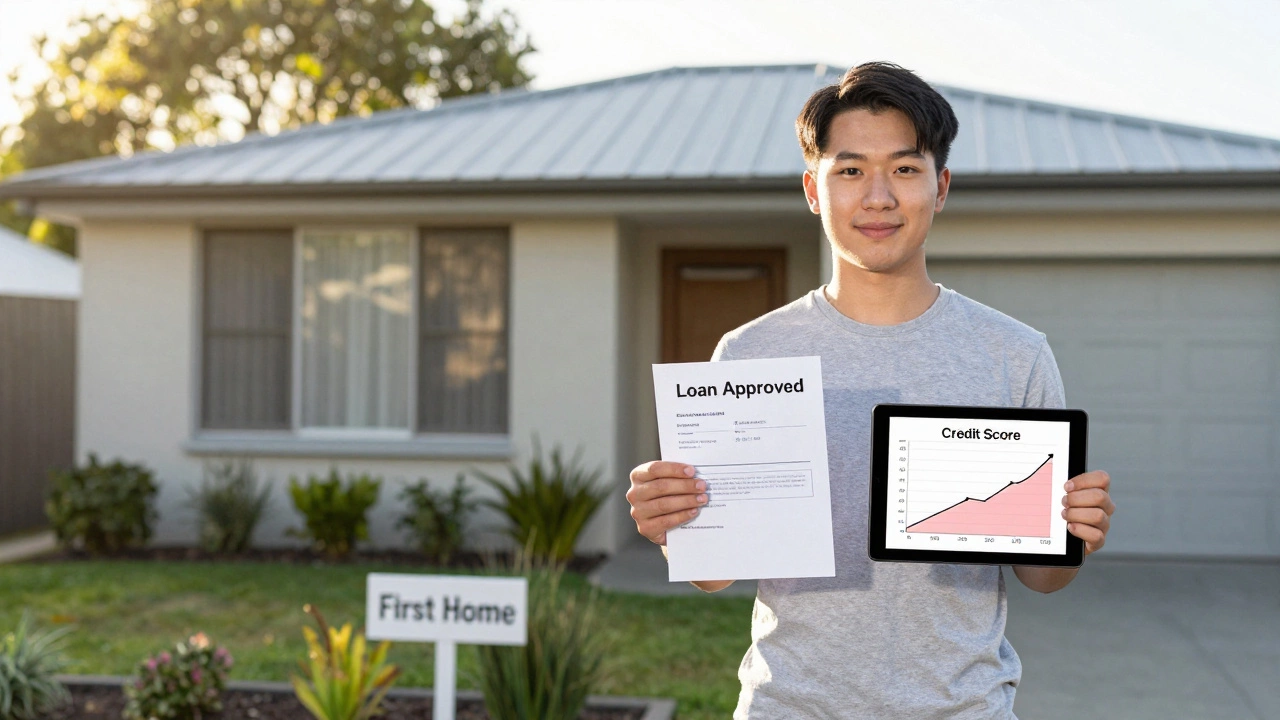
Credit Score Interest Calculator
How Your Credit Score Affects Your Loan
See how your credit score impacts your interest rate and total repayment on a $100,000 home loan in New Zealand.
Note: Rates shown are estimates based on New Zealand lending standards. Actual rates may vary by lender.
Getting a $100,000 loan as a first-time buyer isn’t just about how much you can afford-it’s about whether the lender believes you’ll pay it back. And the number they look at first? Your credit score. It’s not magic, but it’s close. A score in the right range can get you approved faster, with better rates. A score too low? You might get denied-or stuck with a rate that adds thousands to your total cost over time.
What’s a good credit score for a $100,000 loan in New Zealand?
In New Zealand, most lenders don’t use a single universal score like FICO. Instead, they use their own internal models based on data from Equifax and Illion. But here’s what you need to know: for a $100,000 home loan, you generally need a credit score above 650 to be taken seriously. That’s the unofficial floor. Scores between 650 and 750 are considered fair to good. Above 750? You’re in the sweet spot.
Why does this matter for a $100,000 loan? Because lenders see you as higher risk if you’re a first-time buyer with little to no credit history. A low score tells them you’ve missed payments, maxed out cards, or have too many recent credit applications. That’s a red flag-even if you’ve got a solid job and a 10% deposit.
How lenders really judge your creditworthiness
It’s not just the number. Lenders dig deeper. They look at your credit report-the full story behind the score. They check for:
- Payment history: Did you pay bills on time for the last 24 months?
- Credit utilization: Are you using over 80% of your available credit on cards?
- Recent credit applications: Have you applied for three loans or credit cards in the last six months?
- Defaults or court judgments: Any unpaid debts sent to collections?
- Length of credit history: Do you have at least two years of credit activity?
One real example: A 28-year-old teacher in Hamilton applied for a $100,000 loan with a 700 score. She had one late payment on a phone bill from two years ago. The lender approved her-but gave her a 5.8% interest rate instead of 4.9%. That’s $1,200 extra per year. She fixed it by paying off a small personal loan, waiting three months, and reapplying. Her rate dropped to 4.7%.
What if your credit score is below 600?
You’re not out of the game-but you’ll need to work harder. A score under 600 makes approval unlikely with mainstream banks like ANZ, BNZ, or Westpac. But there are options:
- Specialist lenders: Some non-bank lenders (like Mortgage House or Finance NZ) work with borrowers who have lower scores. They charge higher interest-often 7% to 9%-but they’ll approve you if you’ve got a 15-20% deposit and stable income.
- Guarantor loans: A family member can guarantee your loan. This reduces the lender’s risk and can help you qualify even with a 550 score.
- First Home Loan: The KiwiBuild scheme (now part of the First Home Loan) allows scores as low as 580 if you meet income caps and are buying a home under $750,000 in Auckland.
One buyer in Tauranga had a score of 560. He had two defaults from student loans he forgot to pay. He cleared them, waited six months, and used a guarantor (his mum). He got approved for $95,000 with a 6.2% rate. It wasn’t perfect-but it got him in the door.
How to raise your credit score fast
You don’t need years to improve your score. Here’s what actually works in under 90 days:
- Check your credit report for errors. Mistakes happen. A $200 unpaid bill that’s not yours? Get it removed.
- Pay down credit card balances. Keep usage under 30% of your limit. If you have $5,000 credit, keep your balance under $1,500.
- Don’t open new credit accounts. Every application drops your score by 5-10 points temporarily.
- Pay all bills on time-rent, phone, utilities. Some providers now report to credit bureaus.
- Close unused credit cards only if they have annual fees. Otherwise, keep them open to boost your credit history.
One first-time buyer in Christchurch raised her score from 590 to 710 in three months. She paid off a $1,200 medical bill she didn’t know was late, stopped applying for store cards, and started paying her phone bill via direct debit. She got approved for $100,000 at 4.8%.
Other factors that matter more than your score
Your credit score isn’t the whole story. Lenders also look at:
- Deposit size: A 20% deposit ($20,000 for a $100,000 loan) makes you way less risky. Some lenders will accept 10%-but you’ll pay Lenders Mortgage Insurance (LMI), which can cost $3,000-$6,000.
- Income stability: Are you on a permanent contract? Do you have two years of consistent employment? Freelancers need tax returns and bank statements to prove income.
- Debt-to-income ratio: If you’re paying $800/month in car loans and credit cards, and your rent is $600, you’re already spending $1,400. Lenders want your total monthly debt under 40% of your gross income.
One couple in Napier had a 720 score but were rejected because they had $15,000 in student debt and a car loan. They paid off the car loan, saved an extra $5,000, and reapplied. Approval came through within two weeks.

What happens after you get approved?
Getting approved for a $100,000 loan is just the start. You’ll need to:
- Lock in your interest rate (rates can change daily).
- Arrange a valuation-lenders won’t lend more than the home is worth.
- Get legal advice and sign the loan documents.
- Arrange insurance-home and contents are usually required.
And remember: your credit score doesn’t stop mattering after approval. If you miss a payment in the first year, your lender can re-rate your loan-and raise your interest rate.
Bottom line: You don’t need perfect credit-but you need clean credit
You don’t need a score of 800 to get a $100,000 loan as a first-time buyer. But you do need to show responsibility. Pay your bills on time. Keep debt low. Avoid new credit applications. Fix errors. Save a solid deposit.
With a score above 650 and a 10-20% deposit, you’re in the game. Below 600? It’s harder, but not impossible. The key is patience and preparation. Don’t rush. Spend 60-90 days cleaning up your credit before you start house hunting. That time will save you thousands.
What’s the minimum credit score for a $100,000 home loan in New Zealand?
There’s no official minimum, but most lenders won’t approve a $100,000 loan unless your credit score is at least 650. Some specialist lenders may accept scores as low as 580 if you have a large deposit or a guarantor.
Can I get a $100,000 loan with no credit history?
It’s very difficult. Lenders need to see how you handle credit. If you’ve never had a credit card, loan, or even a mobile phone contract in your name, you’ll be seen as a mystery. Start by getting a small credit card, using it for one monthly bill, and paying it off in full each month for six months.
Does a low credit score mean I’ll pay more interest?
Yes. A score under 650 can add 1-2% to your interest rate. On a $100,000 loan over 30 years, that’s $20,000-$40,000 extra in interest. That’s more than most people save for a deposit.
How long does it take to improve my credit score?
You can see improvements in 30-90 days if you pay down debt, fix errors, and stop applying for new credit. Full recovery from serious issues like defaults can take 12-24 months.
Should I wait to buy until my credit score is perfect?
No. Perfect doesn’t exist. Aim for 650+ and a 10-20% deposit. If you’re waiting for 800, you’ll miss out on market opportunities. Focus on clean, consistent behavior-not perfection.