
Down Payment Calculator for $100K Home
Find out how much you need to put down on a $100,000 home based on your loan type.
Select Your Loan Type
Minimum down payment: $3,500
For eligible veterans and active military
For eligible rural areas only
Requires $3,000 down
May cover closing costs too
Your Results
Minimum Down Payment: $0
$0 down payment required
Important: You'll still need $2,000-$5,000 for closing costs. Many programs cover these costs.
Key Considerations
Mortgage insurance required (1.75% upfront + monthly payments)
No mortgage insurance required; requires military eligibility
Must be in eligible rural/semi-rural areas
PMI required until 20% equity; can be removed early
Buying your first home feels exciting-until you see the numbers. If you're looking at a $100,000 house, you might assume you need $20,000 or even $30,000 just to get in the door. But that’s not always true. The truth? You can buy a $100,000 house with as little as $1,000 down-or even nothing at all-depending on where you live and what programs you qualify for.
Minimum Down Payment Options for a $100,000 Home
There’s no single rule for how much you need to put down. It depends on your loan type, credit score, and location. Here are the most common options for a $100,000 house:
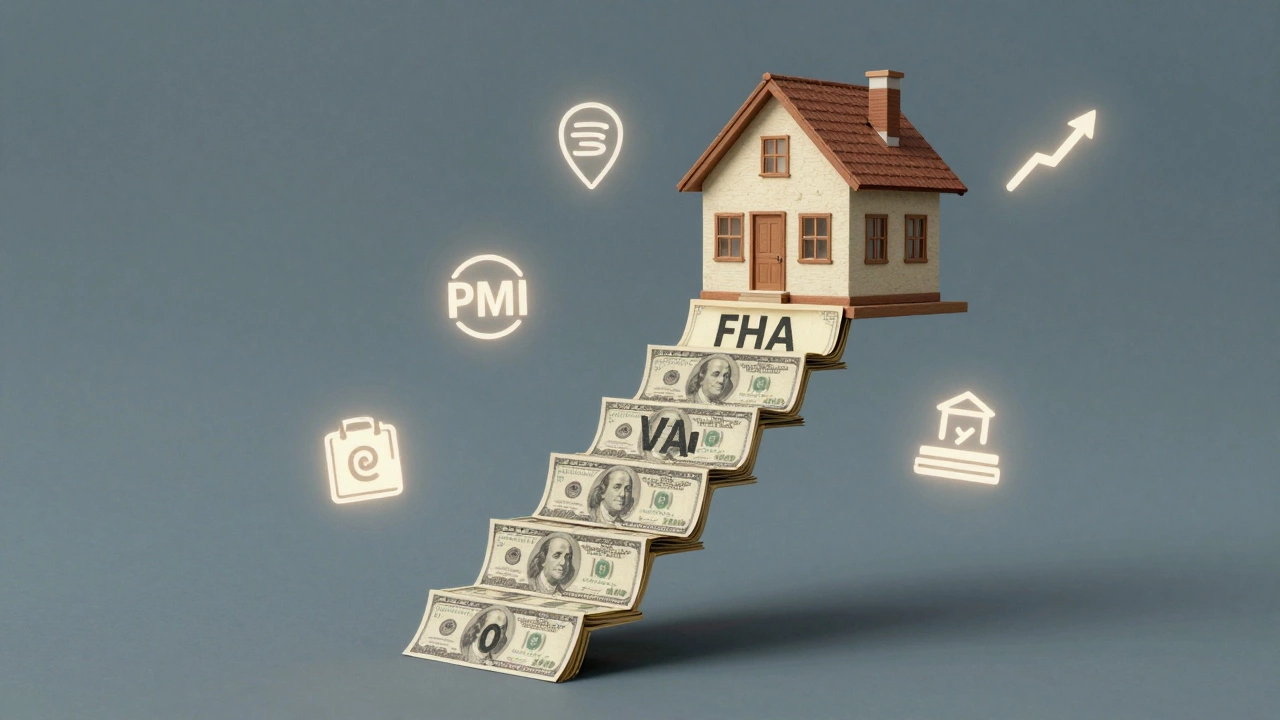
- FHA loan: 3.5% down = $3,500
- VA loan: 0% down (if eligible)
- USDA loan: 0% down (if in eligible rural areas)
- Conventional loan: 3% down = $3,000 (with lender assistance)
- State or local programs: Some offer $0 down with grants or forgivable loans
Most first-time buyers use FHA loans because they’re easier to qualify for. But if you’re a veteran or active-duty service member, VA loans can save you thousands upfront. And if you’re buying in a rural or suburban area designated by the USDA, you might not need any down payment at all.
Why Down Payment Amounts Vary So Much
It’s not just about how much money you have-it’s about who you are and where you’re buying. Lenders use risk-based pricing. The lower your down payment, the higher your risk in their eyes. That’s why they require mortgage insurance on low-down-payment loans.
For example, with an FHA loan at 3.5% down, you’ll pay an upfront mortgage insurance premium (UFMIP) of 1.75% of the loan amount-so $1,750 on a $100,000 home-plus monthly mortgage insurance that lasts for the life of the loan unless you refinance. That adds $50-$80 a month to your payment.
With a conventional loan at 3% down, you’ll pay private mortgage insurance (PMI) too, but it can be removed once you hit 20% equity. That’s a big difference. If you can stretch to $5,000 down, you’ll avoid PMI entirely on a conventional loan and lower your monthly payment by $100 or more.
Can You Really Buy a $100,000 House With No Money Down?
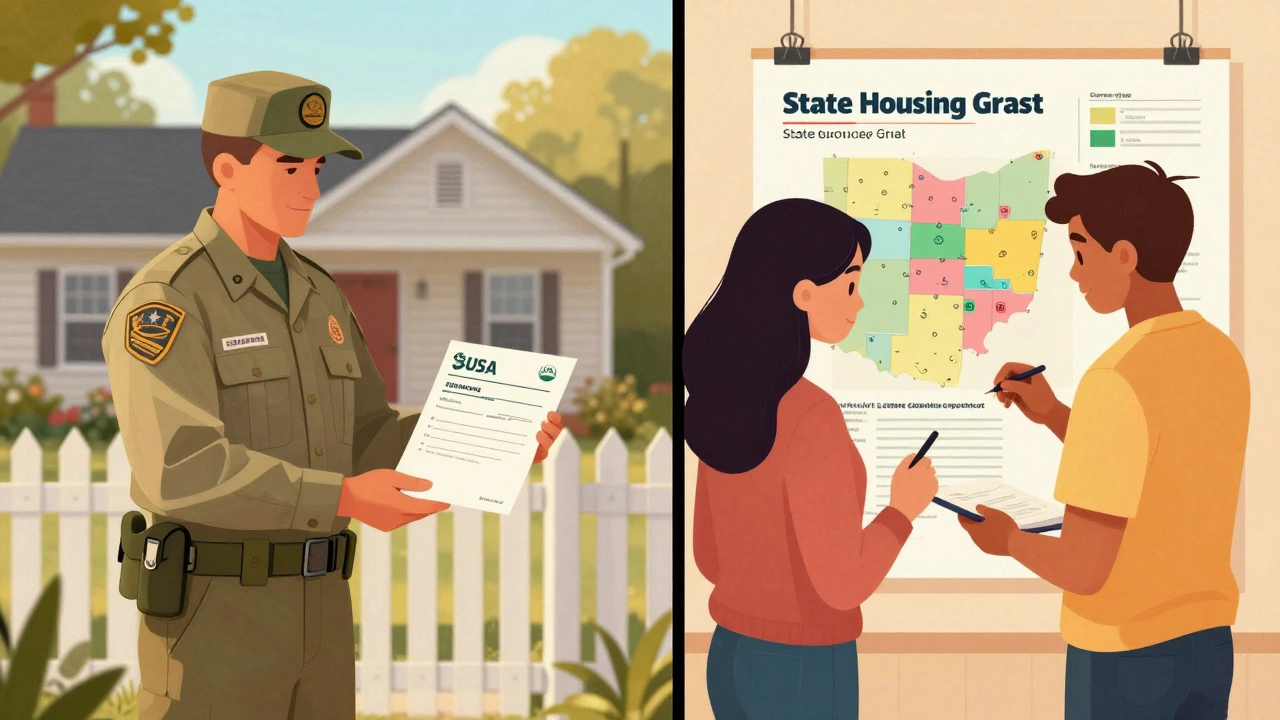
Yes-but only under specific conditions. VA loans are available to veterans, active-duty military, and some surviving spouses. USDA loans are for homes in eligible rural or suburban areas. These programs don’t require a down payment, but they do have income limits and property location rules.
For example, in rural parts of Alabama, Mississippi, or West Virginia, you might find a $100,000 home that qualifies for USDA financing. But in a city like Chicago or Atlanta, you won’t qualify unless you’re in a designated zone. Check the USDA eligibility map online-many people don’t realize their town might be eligible.
Some states also offer down payment assistance programs. In Ohio, the Homebuyer Dream Program gives up to $15,000 in forgivable loans. In Texas, the My First Texas Home program offers grants that don’t need to be repaid if you live in the home for five years. These programs can cover your entire down payment and even help with closing costs.
What Happens If You Put Down Less Than 20%?
Putting down less than 20% means you’ll pay mortgage insurance. That’s not a bad thing-it’s just a cost of getting into the market sooner. But it’s important to understand how it works.
With FHA loans, mortgage insurance stays for the life of the loan unless you refinance into a conventional loan later. That means if you buy a $100,000 home with 3.5% down, you’ll pay mortgage insurance for 15-30 years, even after you’ve built equity.
With conventional loans, PMI drops automatically when your loan balance hits 78% of the home’s original value. That’s usually around 7-8 years. You can also request removal at 80% equity. If the home’s value rises, you might hit 20% equity faster.
Let’s say you buy a $100,000 home with $3,000 down. Your loan is $97,000. If the home appreciates 3% a year, it’s worth $116,000 in five years. You’ve paid down your loan to about $88,000. That’s 76% of the home’s value-you’re now eligible to cancel PMI.
Hidden Costs You Can’t Ignore
Down payment isn’t the only money you need. Closing costs for a $100,000 home usually run between $2,000 and $5,000. These include:
- Appraisal fee: $300-$500
- Home inspection: $300-$500
- Loan origination fee: 0.5%-1% of loan amount
- Property taxes and insurance (prepaid)
- Recording fees and title insurance
Some sellers will pay your closing costs if you ask. That’s common in buyer’s markets. Or you can roll closing costs into your loan-though that increases your monthly payment and total interest paid.
Don’t forget about moving costs, furniture, and repairs. A $100,000 home might need a new roof, updated plumbing, or fresh paint. Budget at least $3,000-$5,000 for those fixes. Many first-time buyers get caught off guard here.
Real Example: Buying a $100,000 Home in Ohio
Meet Sarah. She’s 28, earns $45,000 a year, and has a 680 credit score. She found a $100,000 home in Columbus. She used an FHA loan with 3.5% down: $3,500. She also qualified for Ohio’s Homebuyer Dream Program, which gave her $4,000 to cover closing costs and prepaid expenses.
Her monthly payment: $725. That includes principal, interest, taxes, insurance, and FHA mortgage insurance. She didn’t need to save $20,000. She saved $3,500 over 14 months and used her tax refund to cover the rest.
She’s now in her third year. The home is worth $112,000. She’s built $7,000 in equity. Next year, she plans to refinance into a conventional loan to drop the mortgage insurance and lower her payment.
What to Do If You Can’t Afford Any Down Payment
If you have $0 saved, don’t give up. Start here:
- Check if you qualify for VA or USDA loans.
- Search for down payment assistance programs in your state or county. Most are listed on housing authority websites.
- Ask family for a gift. Many lenders allow down payment gifts if you provide a letter from the donor.
- Use a side hustle to save $100-$200 a month. Even $1,500 saved over a year can get you into a home.
- Consider a manufactured home or small cottage. These often cost less and have lower down payment requirements.
Some credit unions offer first-time buyer programs with 0% down and no PMI. Call local lenders-don’t just rely on big banks. Smaller lenders are more flexible.
When to Wait and Save More
There are times it makes sense to wait. If you’re paying $100 a month in PMI and your rent is only $800, you might be better off saving for a bigger down payment. If your credit score is under 620, you’ll pay higher interest rates and fees. Improving your score by 50 points can save you $50 a month on your mortgage.
Also, if you’re moving for a job that’s not stable, or if you plan to relocate in two years, renting might be smarter. Homeownership costs more than your mortgage-it’s insurance, taxes, repairs, and time.
But if you’re in a stable job, your credit is decent, and you plan to stay put for at least five years, even a small down payment is worth it. The sooner you own, the sooner you build equity-and stop paying rent to someone else.
Final Thoughts: It’s Not About the Down Payment, It’s About the Plan
You don’t need to save $20,000 to buy a $100,000 house. You need a plan. Know your options. Talk to a housing counselor. Use free resources like HUD-approved agencies. Don’t let myths stop you.
Many first-time buyers think they’re not ready. But the truth? The market doesn’t wait. Homes sell fast. If you’re qualified, you can buy now-with less than you think.
Can I buy a $100,000 house with no down payment?
Yes-if you qualify for a VA loan (for veterans and active military) or a USDA loan (in eligible rural areas). Some state programs also offer $0 down with grants. You’ll still need to cover closing costs, which can be negotiated with the seller or covered by assistance programs.
What’s the minimum down payment for a $100,000 house?
The lowest standard down payment is 3% for a conventional loan ($3,000) or 3.5% for an FHA loan ($3,500). Some programs, like USDA and VA, allow $0 down. State and local grants can also cover your down payment entirely.
How much should I save for closing costs on a $100,000 home?
Plan for $2,000 to $5,000 in closing costs. This includes appraisal, inspection, title insurance, loan fees, and prepaid taxes or insurance. Some sellers will pay part or all of this. You can also use down payment assistance programs to cover closing costs.
Do I need perfect credit to buy a $100,000 house?
No. FHA loans accept credit scores as low as 580 for 3.5% down. Some lenders offer FHA loans with scores as low as 500 if you put 10% down. Conventional loans usually need 620 or higher. Improving your score by even 30-50 points can lower your interest rate and save you money long-term.
Is it better to put 3% down or wait and save 20%?
It depends. If you’re in a rising market and prices are increasing fast, buying now with 3% down lets you lock in today’s price and start building equity. If you’re paying $1,000 a month in rent, you’re already spending money-just not on your own home. Waiting to save 20% could mean missing out on years of equity growth. But if your credit is weak or your job is unstable, waiting a year to improve your situation may be smarter.