Shared Ownership Cost Calculator
Calculate Your Shared Ownership Costs
Estimate your monthly costs for shared ownership versus market rent for New Zealand homes
Your Estimated Costs
Your Ownership Share
$0
Monthly Rent on Non-Owned Share
$0
Monthly Mortgage Payment
$0
Total Monthly Cost
$0
$0 savings compared to market rent
Based on current market rent of 0.5% monthly (typical for NZ market)
What This Means For You
Staircasing tip: Each time you increase your share, your rent decreases. For example, adding 10% to your ownership could save you $0 monthly.
Note: These are estimates. Actual costs may vary based on lender fees, provider policies, and market conditions. Always consult a financial advisor before committing.
When you share ownership of a home, it's most commonly called shared ownership. But depending on where you are and how the arrangement works, you might also hear it called shared equity, part buy part rent, or even co-ownership. These aren’t just fancy terms-they describe real ways people in New Zealand and around the world are getting into homeownership without needing a full deposit or a six-figure salary.
How Shared Ownership Actually Works
In New Zealand, shared ownership isn’t as widespread as in the UK, but it’s growing fast-especially in cities like Auckland, Wellington, and Christchurch where housing prices have outpaced wages. The basic idea is simple: you buy a portion of the home-say 30%, 50%, or 70%-and pay rent on the part you don’t own. The rest is owned by a housing association, a government agency, or sometimes a private investor.
You still get to live there full-time. You can renovate, decorate, and treat it like your own. But instead of paying a full mortgage, you pay a smaller mortgage on your share, plus a monthly rent on the rest. This cuts your upfront costs dramatically. A $800,000 home might require a $160,000 deposit if you’re buying 20%, but only $40,000 if you’re buying 5%-making it possible for first-time buyers on average incomes to get a foot in the door.
Shared Ownership vs. Shared Equity
People often mix up shared ownership and shared equity, but they’re different.
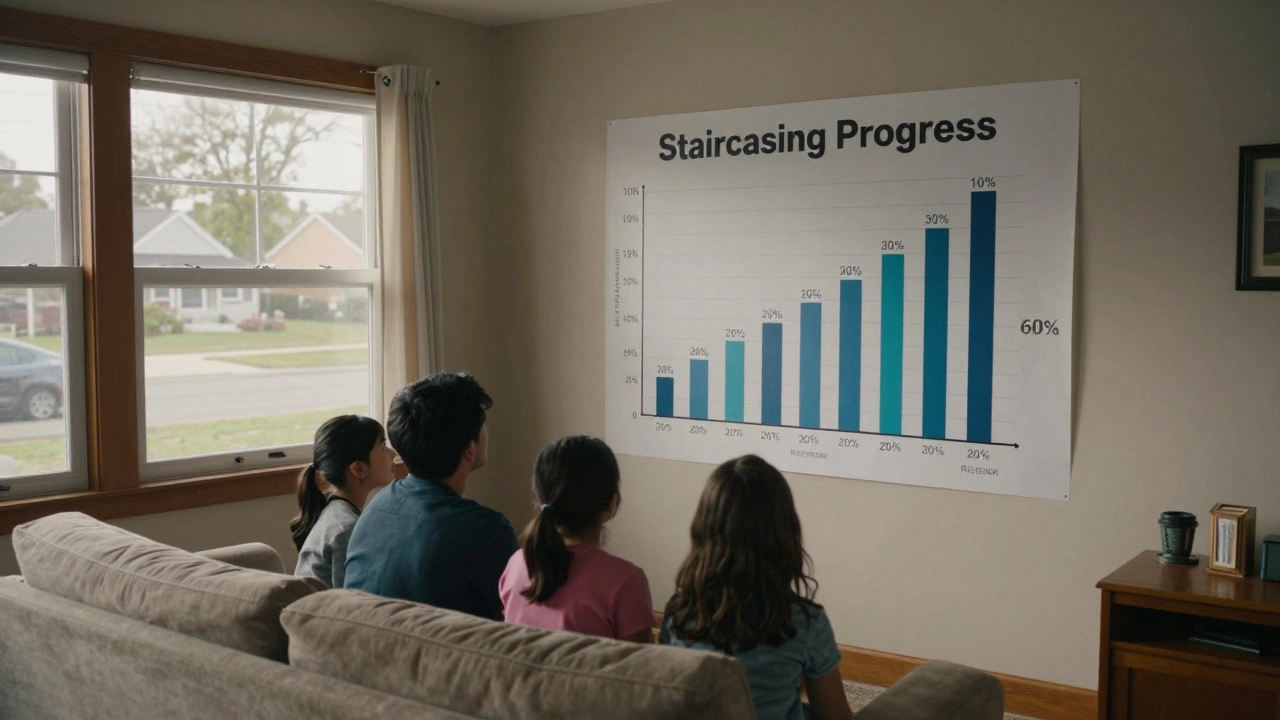
Shared ownership means you own a percentage of the property and rent the rest. The landlord (usually a not-for-profit housing provider) holds the rest. You can increase your share over time-this is called staircasing. Each time you buy more, your rent goes down. Eventually, you can own 100% and stop paying rent altogether.
Shared equity is more like a loan. You buy the whole property, but someone else (often the government) gives you a loan for part of the cost-say 20%-and doesn’t charge interest. In return, they get a share of the profit when you sell. You don’t pay rent. But if the home’s value drops, you still owe them their percentage of the original value. In New Zealand, this model is mostly used in government-backed schemes like the First Home Loan or First Home Grant programs.
Who Can Get Into Shared Ownership?
You don’t need to be rich. Most shared ownership schemes in New Zealand target people who earn under $120,000 a year (or $150,000 for couples), have good credit, and can prove they can afford the mortgage and rent. You can’t already own another home. Some programs require you to be a New Zealand citizen or permanent resident. Others are open to essential workers-teachers, nurses, police officers-who struggle to save enough for a deposit.
It’s not just for young people either. Separated parents, retirees downsizing, or families needing more space but lacking the cash often use shared ownership to stay in their communities.
What You Can and Can’t Do
Here’s what you can do:
- Live in the home as your main residence
- Make improvements (with approval)
- Pass the home to your heirs (if you own 100%)
- Buy more shares over time
- Get a mortgage on your share
And here’s what you can’t:
- Sublet the whole home
- Make major structural changes without permission
- Sell the home without offering the housing provider first right of refusal
- Change the ownership percentage without approval
Some schemes even limit who you can live with-like not allowing unrelated flatmates unless approved. It’s not as free as owning outright, but it’s a lot more freedom than renting.
Real Example: A Family in Papakura
Last year, a nurse and her partner in Papakura bought a two-bedroom home through a shared ownership scheme. They put down $25,000 for a 30% share of a $380,000 house. Their monthly payments? $1,100 total: $750 for their mortgage, $350 for rent on the remaining 70%. That’s $400 less than what they were paying in rent before.
They’ve already started staircasing. After two years, they bought another 10% share. Their rent dropped to $250. In another three years, they plan to own 60%. At that point, they’ll be paying less than $900 a month total-far below market rent for the same house.
They still have to wait for approval before putting in a new kitchen. But they’ve got a garden, a driveway, and a sense of security they never had renting.
The Downsides
It’s not perfect. You’re still tied to a landlord. If they change policies, you’re stuck. Some providers charge high fees for staircasing-$1,000 or more each time you buy more. Others don’t let you sell until you own 100%, which can take 10+ years.
And if the market crashes? You still owe your share. If your home drops 20% in value, you lose money on your investment-even if you didn’t buy much. That’s why it’s critical to get independent legal advice before signing anything.
Also, not all lenders offer mortgages for shared ownership. You’ll need to find a bank or lender that works with housing providers. In New Zealand, only a handful of banks do this regularly: Kiwibank, BNZ, and some credit unions.
Where to Find Shared Ownership Homes in NZ
Right now, the main providers are:
- Housing New Zealand (Kāinga Ora)-runs the largest shared ownership program
- Whenua Māori-for Māori communities, especially in Northland and Bay of Plenty
- Community Housing Providers like Habitat for Humanity NZ and Auckland Housing Trust
- Local Councils-some, like Wellington City Council, have pilot programs
You can’t just walk into a real estate agent and ask for a shared ownership home. These are usually listed on the provider’s own website. Check Kāinga Ora’s Home Ownership Options page. Or talk to a housing advisor through the Ministry of Social Development.
Is Shared Ownership Right for You?
Ask yourself:
- Do you plan to stay in this area for at least 5 years?
- Can you afford a mortgage + rent, even if your income drops?
- Are you okay with rules and approvals for repairs or changes?
- Do you want to eventually own 100%?
If you answered yes to most of these, shared ownership could be your path to stability. If you’re planning to move in 2 years, or you hate paperwork, it’s probably not for you.
What Happens When You Sell?
If you own 50% and decide to sell, you don’t get 50% of the sale price. You get 50% of the current market value minus any fees. The housing provider sells their share too. You both get paid. If you own 70%, you get 70% of the value. Simple.
But here’s the catch: the provider usually has the right to buy back your share first. They might not want to, but if they do, you can’t sell to someone else until they say no. This keeps homes in the system for future buyers.
And if you’ve staircased to 100%? Then you own it outright. You can sell it like any other home. No restrictions. No rent. No approvals.
Final Thought
Shared ownership isn’t a shortcut. It’s a ladder. It doesn’t make homeownership easy-but it makes it possible. For thousands of people in New Zealand, it’s the only way they’ll ever own a home. And for the first time in decades, housing is starting to feel less like a lottery and more like a goal you can plan for.
Is shared ownership the same as renting?
No. With shared ownership, you own part of the home and pay a mortgage on it. You’re building equity. Renters pay for someone else’s asset and get nothing back. Shared ownership gives you control over your space, the chance to increase your share, and a path to full ownership.
Can I get a mortgage for shared ownership?
Yes, but only through certain lenders. Kiwibank, BNZ, and some credit unions offer shared ownership mortgages. You’ll need a deposit for your share, proof of income, and a credit score above 650. Not all banks do this, so check ahead.
Do I have to pay rent forever?
No. You can buy more shares over time-this is called staircasing. Each time you buy more, your rent goes down. Once you own 100%, you stop paying rent entirely. Many people do this over 5-10 years.
What happens if I can’t afford to buy more shares?
That’s okay. You can stay in the home as long as you pay your mortgage and rent. You don’t have to staircase. You still benefit from lower payments than market rent, and you own part of the asset. You can sell your share anytime, but you won’t get full market value-you’ll get what your portion is worth at that time.
Can I leave the home to my kids?
Yes, if you own 100%. If you own less, your share can be passed on, but the housing provider still owns the rest. Your heirs would inherit your percentage and continue paying rent on the rest. They can choose to staircase later if they want full ownership.