Real Estate Agency Trust Evaluator
Use this tool to score a potential real estate agent or brand. Higher scores indicate a higher level of trust based on the article's criteria.
Your Agent's Trust Score: 0/100
Recommendation:
Key Takeaways for Your Search
- National brands offer consistency and massive marketing reach but can lack local nuance.
- Boutique agencies often provide deeper local expertise and more personalized service.
- Trust is verified through actual closing data and verified client testimonials, not advertising spend.
- The best agent for a luxury penthouse is rarely the best agent for a first-time buyer's cottage.
The Big Brand Paradox
When people search for a trusted real estate brand is a company specializing in the buying, selling, and managing of residential or commercial properties, they usually gravitate toward the household names. These companies spend millions on brand awareness, which creates a psychological shortcut: "If I've seen their logo everywhere, they must be good." This is called the availability heuristic. In reality, a massive corporate structure can sometimes lead to a disjointed experience. You might sign a contract with a top-tier broker, only to be handed off to a junior agent who has never visited your neighborhood.
Large firms have a huge advantage in property marketing. They often have integrated portals and a global database of buyers. If you're selling a high-end property that needs international exposure, a global brand can be a lifesaver. However, for most residential sales, the 'trust' factor comes down to the individual agent's ability to negotiate and their knowledge of the specific street your house is on.
Boutique Agencies vs. National Powerhouses
If you're looking for estate agents near you, you'll likely face a choice between a global franchise and a local boutique. A boutique agency is typically a smaller, independently owned firm. These agents often live in the community they serve. This gives them an unfair advantage in knowing which schools are trending or which upcoming local development will drive up property values in six months.
On the other hand, national brands provide a layer of corporate accountability. They have standardized contracts, strict compliance rules, and a brand reputation to uphold. If an agent goes rogue at a big firm, there's usually a corporate office you can call to resolve the issue. With a tiny boutique, you're relying almost entirely on the personality and ethics of the owner.
| Feature | National Brand | Boutique Agency |
|---|---|---|
| Marketing Reach | Global / National | Local / Regional |
| Agent Experience | Variable (High to Low) | Usually High/Specialized |
| Fees | Standardized / Higher | Negotiable / Flexible |
| Local Nuance | Moderate | Exceptional |

Red Flags When Vetting a Real Estate Brand
Trust isn't just about the presence of good reviews; it's about the absence of warning signs. One of the biggest red flags is the "over-promise." If an agent guarantees a price that is 10% higher than every other valuation you've received, they aren't being optimistic-they're likely "buying the listing." This is a tactic to get you to sign a contract, after which they'll spend two months telling you your house is overpriced and needs a price drop.
Another warning sign is a lack of transparency regarding their Commission Structure is the agreed-upon percentage of the final sale price paid to the agent as compensation for their services. Trusted brands are up-front about their fees, whether it's a flat fee or a percentage. If they dodge the question or keep changing the terms, your trust should drop immediately.
How to Verify Real-World Trust
Don't trust a website's own "Testimonials" page. Anyone can write a fake review or cherry-pick the best ones. Instead, look for third-party verification. Check Google Maps reviews for the specific office you'll be dealing with, not the corporate headquarters. Read the 3-star reviews-they're usually the most honest. The 5-star reviews are often from friends of the agent, and the 1-star reviews are often from people who were simply unhappy that their house didn't sell in a week.
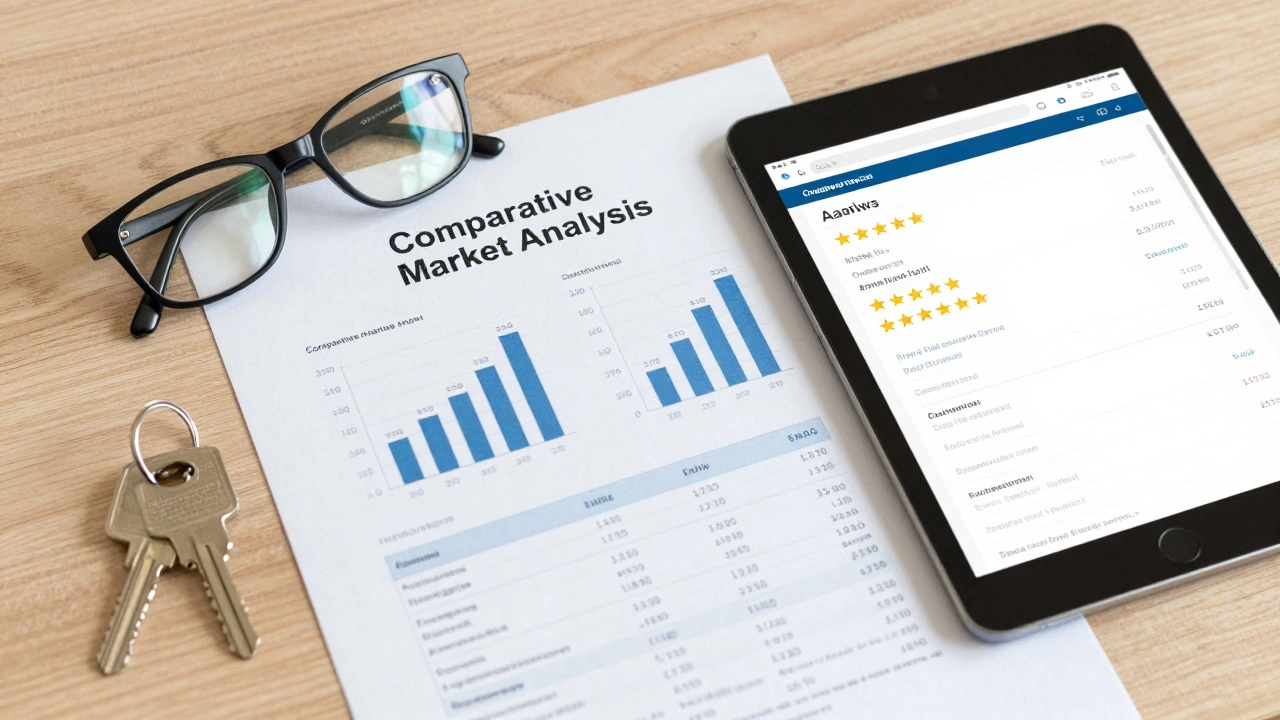
Ask the agent for a "comparative market analysis" (CMA). A trustworthy brand will provide a detailed report showing what similar homes in your immediate area actually sold for, not just what they are listed for. There is a huge gap between a "asking price" and a "sale price," and an honest agent will be clear about that gap from day one.
The Role of Professional Certifications
Trust is also built on professional standards. In the US, look for agents who are members of the National Association of Realtors is a professional trade association of real estate brokers and agents in the United States (NAR). This means they adhere to a strict Code of Ethics. In the UK, check if they are members of The Property Ombudsman is a government-approved scheme that provides an independent redress service for property consumers or the RICS (Royal Institution of Chartered Surveyors). These certifications mean there is a formal process for dispute resolution if things go wrong.
Certification doesn't make an agent a genius, but it does mean they are operating within a regulated framework. An agent who refuses to join these bodies or cannot provide their registration number is a risk you don't need to take.
Matching the Brand to Your Property Type
The "most trusted" brand for a studio apartment in the city is not the same as the most trusted brand for a rural estate with ten acres of land. Specialization is where trust truly lives. If you have a unique property-say, a historic home or a commercial warehouse-you need a brand that has a portfolio of similar successful sales. A generalist agent might be great at selling suburban semis, but they'll be out of their depth with a Grade II listed building.
Ask to see their current listings. Are the photos professional? Is the copy descriptive and accurate, or is it full of clichés like "must be seen to be appreciated"? High-quality presentation is a proxy for how they will treat your property. If they can't be bothered to write a good description for their own current listings, they won't do it for yours.
Do bigger real estate brands always get a higher sale price?
Not necessarily. While big brands have more marketing tools and a wider reach, the final sale price depends more on the agent's negotiation skills and the accuracy of the initial pricing. A local boutique agent with a deep network of "off-market" buyers can often secure a higher price than a big brand that relies solely on public portals.
How can I tell if an agent is just trying to get my listing?
Be wary of agents who quote a significantly higher valuation than other competitors without providing concrete evidence (like recent sales of identical homes). If they refuse to discuss a price reduction strategy from the start, they may just be "buying the listing" to get you to sign a contract.
Is it better to use a brand with a global presence?
It depends on your target buyer. If your home is an investment property or a luxury estate that would attract international buyers (e.g., from Asia or the Middle East), a global brand is a huge asset. For a standard family home, local expertise is far more valuable than global reach.
What should I do if I'm unhappy with a trusted brand's service?
First, review your contract to see the terms for termination. If the agent is part of a larger brand, contact the branch manager or the corporate office to request a change of agent. If the issue is a breach of contract or ethics, you can escalate the complaint to an industry ombudsman or professional body like NAR or RICS.
Should I trust agents who offer a "no sale, no fee" guarantee?
Most reputable agencies offer this, but it doesn't automatically mean they are trustworthy. It simply removes the financial risk of the listing. The real test of trust is whether they provide honest feedback from viewings, even when that feedback is negative, rather than just telling you what you want to hear to keep you happy.
Next Steps for Homeowners
If you're ready to pick an agent, don't just pick the one with the most signs in your neighborhood. Start by interviewing three different options: one big national brand, one mid-sized local firm, and one boutique specialist. Ask them all for a CMA and a specific marketing plan for your home. The one who asks the most questions about your goals and gives the most realistic (not the highest) price is usually the one you can trust.
If you're in a hurry, prioritize agents who have sold a home on your specific street in the last six months. That is the ultimate proof of competence and trust in your specific micro-market.