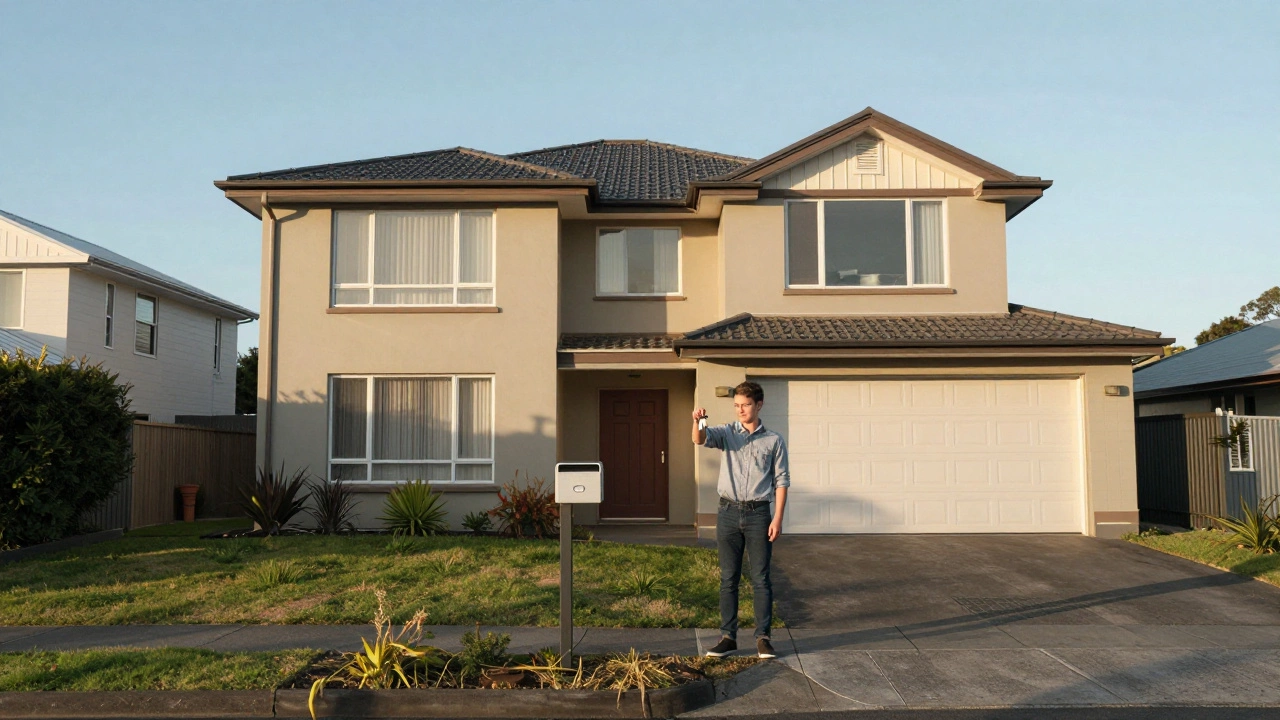
Auckland Home Affordability Calculator
How much home can you afford?
Based on Auckland's current market conditions, lender requirements, and your income.
Your Results
Maximum Loan Amount:
Estimated Monthly Mortgage:
Total Monthly Cost (including rates & insurance):
Affordability Percentage:
Based on lender requirements: maximum 6x annual income, plus stress test at 2% higher rate.
How to improve your affordability
- Save more for your deposit - every $10,000 extra reduces your monthly payment
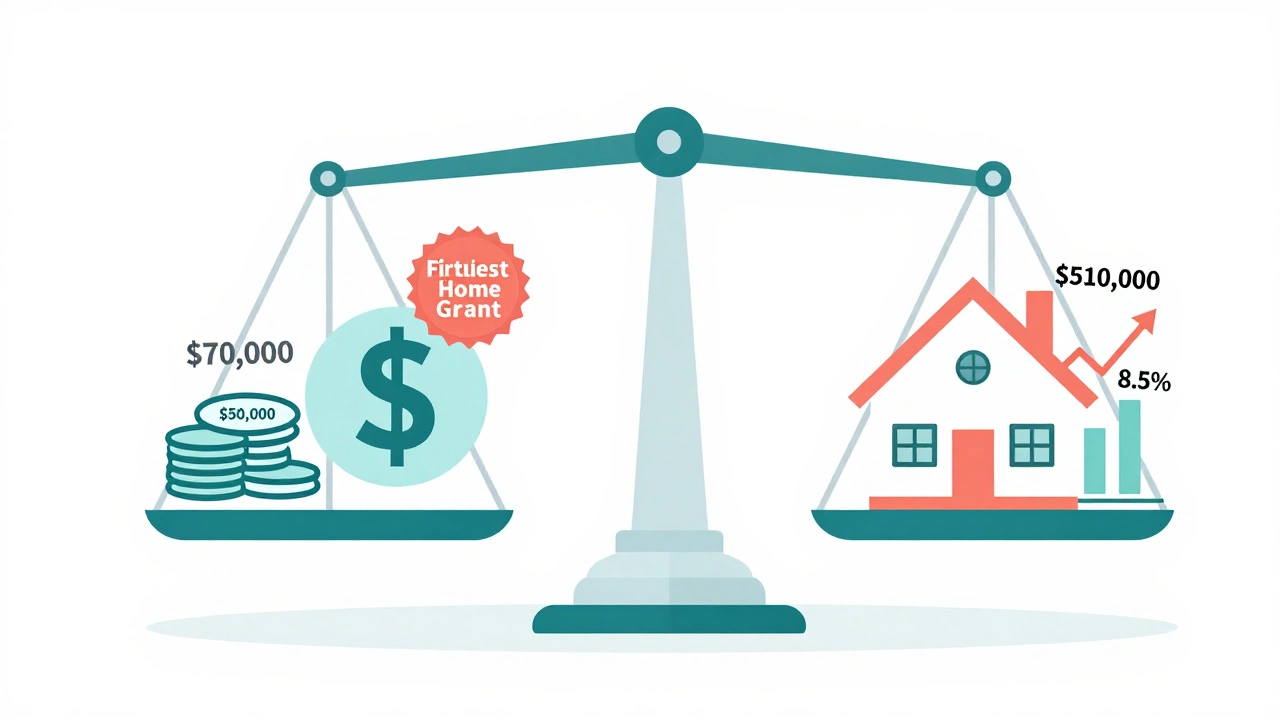
- Consider the First Home Grant (up to $20,000 for couples) if eligible
- Live with family or flatmates to save aggressively for 12-18 months
- Look at suburbs like Manurewa, Papakura, Wiri, or Pukekohe for better value
If you make $70,000 a year and are thinking about buying your first home in Auckland, you’re not alone. Thousands of first-time buyers face the same question: how much house can I afford? The answer isn’t just about your salary-it’s about your debt, your savings, your lifestyle, and the current market. In 2025, Auckland’s median house price sits around $950,000. That might sound impossible on $70,000, but it’s not. Many people are buying homes at this income level-just not the way they used to.
What lenders actually look at
Banks don’t just check your salary. They look at your total financial picture. They calculate your debt-to-income ratio, which is how much you owe every month compared to what you earn. Most lenders in New Zealand cap this at 6 times your annual income. So on $70,000, the maximum loan you could theoretically get is $420,000. But that’s not the whole story.They also look at your living expenses. If you spend $1,200 a month on food, transport, phone, and entertainment, that’s $14,400 a year. Add $300 a month for insurance, utilities, and maintenance-that’s another $3,600. Now you’re spending $18,000 just to live. That leaves $52,000 for housing. But you can’t use all of it.
Lenders apply a stress test. They pretend your mortgage rate is 2% higher than what you’re offered. So if the current rate is 6.5%, they test you at 8.5%. That means a $420,000 loan at 6.5% would cost $2,600 a month. But at 8.5%, it jumps to $3,200. If your income doesn’t comfortably cover that, you won’t get approved.
How much house can you realistically buy?
Let’s say you’ve saved $50,000 for a deposit. That’s a strong start. Most lenders want at least 10% down, but 20% is better-it avoids Lenders’ Mortgage Insurance (LMI), which can cost thousands.With a $50,000 deposit, you’re looking at a purchase price of around $500,000. That’s within reach on $70,000 a year, if you’re careful. At 6.5% interest over 30 years, your monthly mortgage payment would be about $3,150. Add $400 for rates, insurance, and maintenance, and you’re at $3,550 a month. That’s 61% of your take-home pay after tax.
That’s tight. But doable-if you cut back on eating out, subscriptions, and weekend trips. Many first-time buyers in Auckland live in suburbs like Manurewa, Papakura, or Wiri, where 3-bedroom homes start around $550,000. You might not get a beachfront villa, but you can get a solid, modern home with a yard and good schools nearby.
What if you don’t have a big deposit?
If you’ve only saved $20,000, you’re looking at a $200,000 loan on top of your deposit. That means a $250,000 house. That’s possible-but you’ll need to be in a lower-cost area like South Auckland, East Auckland, or even further out like Pukekohe. Some first-time buyers are buying older, smaller homes (think 70s bungalows or 1980s townhouses) and planning to renovate later.There’s also the First Home Loan scheme. If you’re a first-time buyer earning under $95,000 (single) or $150,000 (couple), you can get a loan with as little as 5% deposit. The government guarantees part of the loan, so banks take less risk. You still need to pass the stress test, but it gives you a real shot.
Other costs you can’t ignore
Buying a house isn’t just the mortgage. There’s the legal fee ($1,500-$2,500), building inspection ($500-$1,000), valuation fee ($300-$600), and moving costs ($1,000-$3,000). If you’re buying an older house, you might need to budget $10,000-$20,000 for repairs-new roof, insulation, or wiring.And don’t forget the government’s new homebuyer levy. Since 2024, all homebuyers pay a $1,000 fee when registering land. It’s small, but it adds up. If you’re using a real estate agent to find a home, their fee is usually paid by the seller-but you’ll still need to pay for your own conveyancer.
What kind of home can you get?
On $70,000 a year with a $50,000 deposit, here’s what you’re likely to find in Auckland in 2025:- A 3-bedroom, 1-bathroom house in Manurewa or Papakura-built in the 1990s, with a small yard and garage
- A 2-bedroom townhouse in East Auckland, newer build, shared walls, but modern kitchen and insulation
- A 2-bedroom apartment in Glen Innes or Onehunga-low maintenance, but no outdoor space
- A fixer-upper in Wiri or Māngere-needs new flooring, paint, and insulation, but priced at $420,000
These aren’t luxury homes. But they’re homes. They have heating, hot water, and safe structures. And they’re places you can build equity in.
How to stretch your budget
If you’re serious about buying, here’s what works:- Live with parents or flatmates for 12-18 months and save aggressively. Even $1,000 a month adds up to $18,000.
- Use the First Home Grant if you’re eligible. You can get up to $10,000 (single) or $20,000 (couple) if you’ve saved for 12 months and buy a new or existing home under $750,000.
- Consider a joint purchase with a partner, sibling, or friend. Two incomes mean more borrowing power.
- Look beyond the city center. Properties in Franklin, Hauraki, or Waiuku are 20-30% cheaper than central Auckland.
- Buy a smaller home now and upgrade later. Many people start with a 2-bedroom and move up after 5 years.

What to avoid
Don’t fall into these traps:- Buying the biggest house you can technically afford. That leaves no room for emergencies.
- Ignoring the stress test. Just because a bank says yes doesn’t mean you can live on that budget.
- Thinking you’ll sell in 2 years. Auckland’s market isn’t a flip game anymore. You need to plan to stay 5+ years.
- Skipping the building inspection. A $600 inspection can save you $20,000 in hidden repairs.
Real example: Sarah’s story
Sarah, 28, earns $72,000 as a dental assistant. She saved $45,000 over two years by living with her parents and cutting all non-essentials. She used the First Home Grant to get $10,000 extra. She bought a 3-bedroom house in Papakura for $510,000. Her deposit was $55,000. Her mortgage is $3,050 a month. She pays $350 for rates and insurance. Her total housing cost is $3,400. Her take-home pay is $4,600. She has $1,200 left for everything else-groceries, car, phone, and occasional trips. She’s not rich. But she owns her home. And she sleeps better knowing she won’t get evicted.You can do this. Not with a dream home. But with a real one.
Can I buy a house on $70,000 a year in Auckland?
Yes, but not in the most expensive suburbs. You’ll need a solid deposit-ideally $50,000 or more-and be willing to live outside the city center. Homes in Papakura, Manurewa, Wiri, or Pukekohe are within reach. The key is sticking to a budget, using government grants, and avoiding overextending on the mortgage.
How much deposit do I need for a house in Auckland?
Most lenders want at least 10% of the purchase price. For a $500,000 home, that’s $50,000. If you have less, you can qualify for the First Home Loan scheme with 5% down. But you’ll pay Lenders’ Mortgage Insurance, which adds $5,000-$15,000 to your costs. Saving 20% is ideal-it gives you more options and lower monthly payments.
What’s the monthly mortgage payment on a $500,000 house?
At a 6.5% interest rate over 30 years, your monthly repayment would be around $3,150. Add $400 for rates, insurance, and maintenance, and you’re looking at $3,550 total. That’s about 60-65% of your take-home pay after tax. It’s tight, but manageable if you have low other expenses.
Are there any government grants for first-time buyers?
Yes. The First Home Grant gives you up to $10,000 (single) or $20,000 (couple) if you’ve saved for 12 months and buy a home under $750,000. The First Home Loan lets you buy with 5% deposit and no LMI. Both require you to be a New Zealand citizen or resident, and you can’t have owned property before.
Should I buy now or wait for prices to drop?
Auckland prices aren’t expected to drop sharply in 2025. They’re stabilizing, not falling. Waiting might mean missing out on low interest rates or losing out on government grants. If you’re ready financially, buying now gives you equity growth and protection against rent increases. Renting in Auckland costs $600-$800 a week for a similar home. That’s $31,200-$41,600 a year-money you’re not building equity on.
Can I buy with a friend or family member?
Yes. Joint purchases are common among first-time buyers. Two incomes can double your borrowing power. But you need a clear legal agreement upfront-what happens if one person wants to sell? Who pays for repairs? Use a lawyer to draft a co-ownership agreement. It’s not romantic, but it’s necessary.
Next steps
If you’re serious about buying:- Check your credit score. Aim for 700+.
- Calculate your monthly expenses. Be honest.
- Use the MBIE affordability calculator to see what you qualify for.
- Apply for the First Home Grant if eligible.
- Get pre-approved for a mortgage. It shows sellers you’re serious.
- Start looking in suburbs where homes are under $550,000.
You don’t need to be rich to own a home in Auckland. You just need to be smart, patient, and willing to make trade-offs. The goal isn’t to have the biggest house. It’s to have a place that’s yours-and that you can afford without stress.