
Shared Ownership Cost Calculator
Buying a home in Auckland feels impossible if you’re on a regular income. Prices keep climbing, deposits grow bigger, and banks tighten their rules. But what if you could own a home without buying it all at once? That’s where property shares come in.
Property shares, also called shared ownership, let you buy a portion of a home-usually between 25% and 75%-while paying rent on the rest. It’s not renting. It’s part-owning. And it’s designed for people who can’t afford a full mortgage but still want to build equity and put down roots.
How Shared Ownership Actually Works
You don’t lease the whole house. You buy a share, and the rest is owned by a housing association or government-backed body. In New Zealand, this is mostly handled through Kāinga Ora or approved community housing providers. You take out a mortgage only on the share you buy. For example, if a home is worth $800,000 and you buy a 50% share, your mortgage is $400,000. You pay rent on the other 50% to the housing provider.
The rent isn’t like regular landlord rent. It’s usually a small percentage of the value of the unsold share-often around 2.75% per year. So on that $400,000 unsold portion, you’d pay about $11,000 a year in rent, or roughly $900 a month. That’s often less than what you’d pay to rent the whole place on the open market.
You also pay service charges for building maintenance, groundskeeping, and shared facilities. These are clearly listed in your contract and can’t be raised without notice.
Who Can Get Into Shared Ownership?
You don’t need to be rich. But you do need to meet a few basic rules:
- Your household income must be under $120,000 a year (or $140,000 in Auckland, due to higher costs).
- You must be a first-time buyer, or have previously owned but can’t afford to buy again.
- You can’t own another home anywhere in the world.
- You need to pass affordability checks-same as a regular mortgage.
There’s no minimum credit score, but lenders want to see stable income, low debt, and a clean payment history. If you’ve missed payments recently, you’ll need to wait or fix your credit before applying.
What You Own vs. What You Rent
This is where people get confused. When you buy a 30% share, you own 30% of the property legally. That means if the home’s value goes up, you get 30% of that gain. If it drops, you lose 30% of that value. You’re not just paying rent-you’re building real equity.
The housing provider owns the rest. They handle repairs to the building’s structure, roof, and external walls. You’re responsible for everything inside your unit: plumbing, electrics, flooring, painting, and appliances. Think of it like owning a condo-you manage your space, they manage the building.

Can You Buy More Later? (Staircasing Explained)
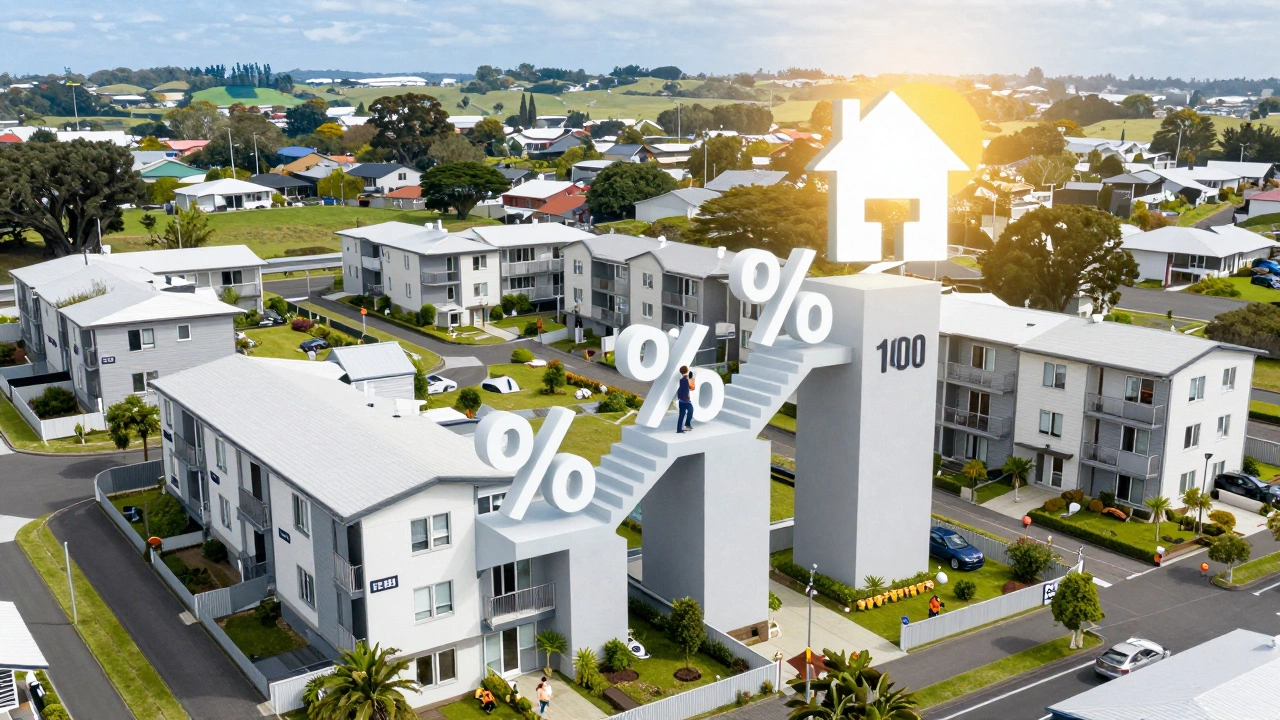
One of the biggest perks of shared ownership is staircasing. That’s the fancy word for buying more shares over time. You can buy additional 10%, 25%, or even 50% chunks as your finances improve.
Each time you staircase, you pay for the new share based on the home’s current market value. So if you bought a 25% share when the home was worth $600,000, you paid $150,000. Two years later, the home is worth $700,000. If you want to buy another 25%, you pay $175,000-not the original price.
You can keep staircasing until you own 100%. At that point, you stop paying rent. You’re a full homeowner. No more housing association. No more rent. Just a mortgage, just like anyone else.
Most people staircase in stages-maybe once every 3-5 years. You can’t staircase more than once a year, and you’ll need a new valuation and mortgage approval each time.
What Happens If You Want to Sell?
If you decide to leave the shared ownership scheme, you can sell your share. But you can’t just list it on Trade Me. The housing provider has the first right to find a buyer. They’ll market it to other eligible shared ownership applicants-people who meet the income and ownership rules.
If they find someone within 12 weeks, you sell to them at the current market value. If not, you can list it on the open market, but only to someone who qualifies for shared ownership. You can’t sell to someone who wants to buy the whole place outright unless they meet the same rules you did.
You keep all the profit from your share. So if you bought 40% for $200,000 and sold it later for $300,000, you pocket $100,000. The housing provider gets nothing. They only ever owned the part you didn’t buy.
Pros and Cons of Property Shares
It’s not perfect. Here’s what works-and what doesn’t.
Pros
- Lower upfront cost-you need a smaller deposit (as low as 5% of your share).
- Monthly payments are often cheaper than renting the same property.
- You build equity over time, even with a small share.
- You can eventually own 100%-no permanent rent.
- More stability than renting. You can renovate, paint, and make it yours.
Cons
- You still pay rent on part of your home.
- Staircasing costs rise with property values-you might pay more later than you expected.
- Resale is restricted. You can’t always sell to anyone.
- Some developments have strict rules about pets, subletting, or renovations.
- You need to plan ahead. If your income drops, you might not be able to staircase.
Where to Find Shared Ownership Homes in New Zealand
Most shared ownership homes are in new builds or converted apartments. They’re not scattered across the whole market. You’ll find them mostly in:
- Auckland suburbs like Manukau, Papatoetoe, and Howick
- Wellington’s lower-cost zones like Lower Hutt and Porirua
- Hamilton and Tauranga, where new developments are being built specifically for shared ownership
Check Kāinga Ora’s website for current listings. You can also ask registered housing providers like Habitat for Humanity NZ or local community trusts. They often have waiting lists and priority systems.
Is Shared Ownership Right for You?
If you’re tired of renting, can’t save for a full deposit, and want to own something real-yes. It’s not a shortcut. It’s a ladder. You climb it slowly, one share at a time.
It’s perfect if you plan to stay in one place for 5+ years. If you think you’ll move in 2 years, you might lose money on fees and valuations. Staircasing and selling both come with costs: legal fees, valuation fees, and sometimes admin charges.
But if you’re serious about homeownership, and you’re okay with a longer path, shared ownership gives you a real shot. You’re not just paying rent. You’re paying into your future.
Can I get a mortgage for a property share?
Yes. Most major banks in New Zealand-ANZ, ASB, BNZ, and Westpac-offer mortgages for shared ownership. You’ll need to borrow only for the share you’re buying, not the whole property. Lenders will check your income, credit history, and how much rent you pay. Some require a minimum 5% deposit on your share. You can’t use KiwiSaver for the rent portion, but you can use it for your mortgage deposit.
What happens if I can’t afford to staircase?
You don’t have to staircase at all. You can stay at your original share forever. You’ll still own that portion, and you’ll still benefit if the property value rises. If your income drops, you can apply for rent assistance through Work and Income. You won’t lose your home. But if you fall behind on mortgage or rent payments, the housing provider can take legal action-just like a regular mortgage.
Can I rent out my share?
No. Shared ownership homes are meant for owner-occupiers. Most contracts forbid subletting or renting out your share. If you need to move away-for work, study, or family-you must sell your share back to the housing provider or find another eligible buyer. Some providers allow temporary rentals under hardship, but you’ll need written approval.
Do I pay stamp duty or land transfer tax?
No. New Zealand doesn’t have stamp duty. But you do pay Land Transfer Tax, which is a small fee based on the value of your share. For most shared ownership purchases, this is under $500. Your lawyer will handle this as part of the settlement process. There are no hidden taxes.
How long does the process take?
From application to moving in, it usually takes 8-12 weeks. Finding a property can take longer if there’s a waiting list. Once you’re approved, you’ll need to get a mortgage offer, complete a valuation, and sign legal documents. The housing provider will guide you through every step. Many offer free financial advice sessions to help you understand your costs.