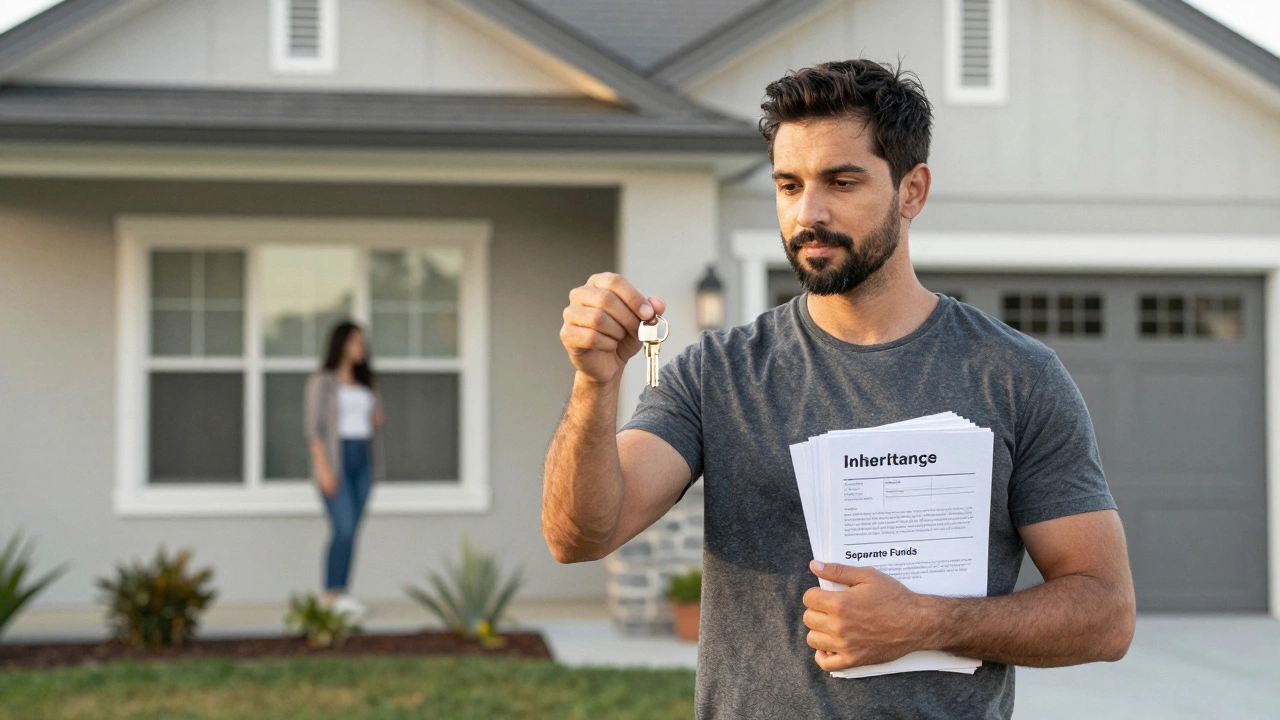
Many people assume that if you’re married, you and your spouse automatically own everything together - including a house. But that’s not always true. The short answer? Yes, a married man can buy a house without his wife. But whether he should, and what it means legally and financially, is where things get complicated.
It Depends on Where You Live
The rules around property ownership after marriage aren’t the same everywhere. In the U.S., your state determines whether you’re in a common law state or a community property state. This changes everything.In common law states - which include most of the country like Texas, Florida, and New York - property bought in one person’s name during marriage is usually considered that person’s separate property, as long as no marital funds were used to pay for it. That means a husband could buy a house using only his own income, savings, or inheritance, and his wife wouldn’t automatically have a claim.
But in community property states - like California, Arizona, Nevada, and Texas (yes, Texas is both, depending on context) - anything bought during the marriage is considered jointly owned, even if only one spouse’s name is on the title. That includes income earned during the marriage. So if the husband used his paycheck to buy the house, the wife has a legal right to half of it, no matter whose name is on the deed.
How to Buy a House Without Your Spouse
If you’re in a common law state and want to buy a house alone, here’s how to do it right:- Use only your own money - no joint accounts, no marital savings, no gifted funds from your spouse.
- Keep all financial records separate - bank statements, pay stubs, inheritance papers.
- Apply for the mortgage in your name only - your spouse shouldn’t be on the loan application.
- Don’t add your spouse to the title after closing - that changes everything.
If you’re using money from a joint account, or your spouse helped pay the down payment, even if it’s a small amount, the house could become marital property. Courts look at how money flowed, not just whose name is on the deed.
What Happens If You’re in a Community Property State?
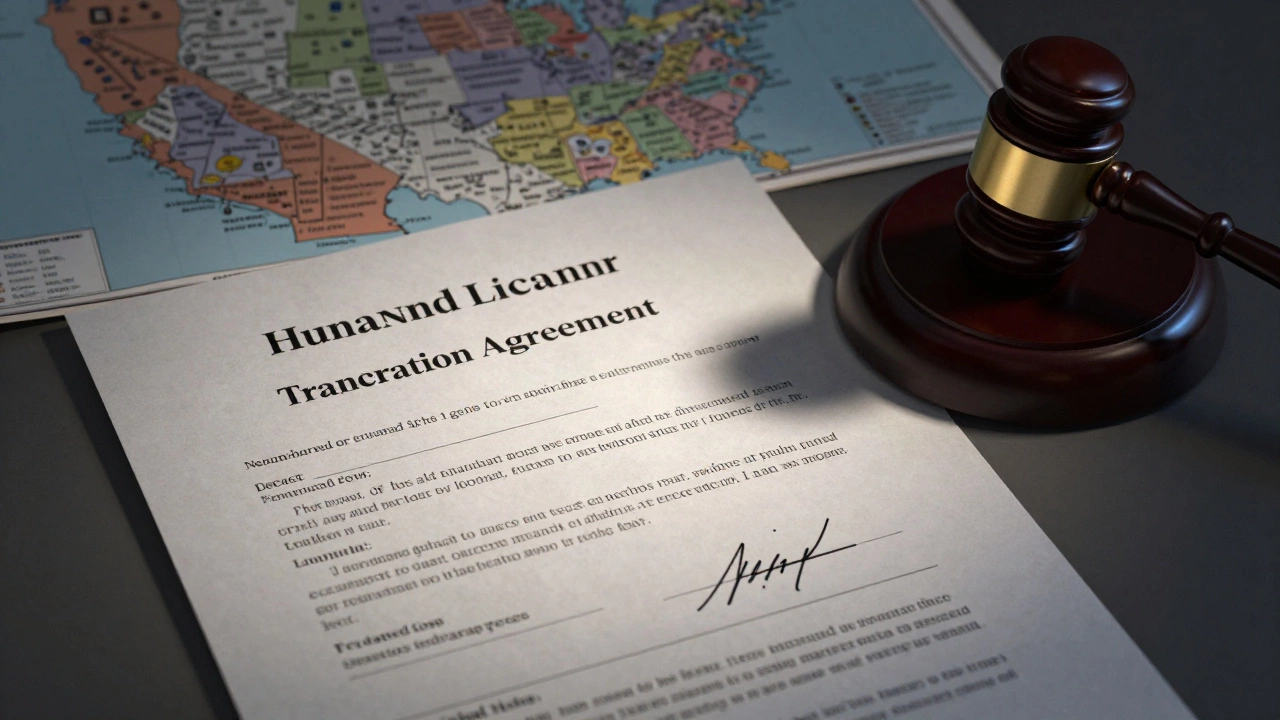
Here’s the reality: even if you try to buy a house alone in California or Washington, your spouse still has rights. Why? Because under community property laws, your income during marriage is considered community property. So if you used your salary to buy the house, your wife is entitled to 50% - whether she signed anything or not.There’s only one way around this: sign a transmutation agreement or a prenuptial agreement that clearly states the house is your separate property. These documents must be in writing, signed by both parties, and often need to be notarized. Without one, the house is likely split 50/50 in a divorce.
Why Would Someone Want to Buy a House Alone?
People do this for different reasons:- One spouse has bad credit and can’t qualify for a loan.
- One partner has high debt and would lower the other’s borrowing power.
- Someone inherited money and wants to keep it separate.
- A person is buying a vacation home or investment property and doesn’t want the spouse to have ownership rights.
But here’s the catch: lenders often ask for your spouse’s financial info anyway, even if they’re not on the loan. Why? Because if you live together, your spouse’s debts and income affect your ability to repay. So even if your wife isn’t on the mortgage, the bank might still look at her credit score and monthly obligations.
The Mortgage Trap
Many people think they can hide their spouse from the lender. But lenders have rules. If you’re married and live together, most lenders will require your spouse to sign a document called a spousal consent or non-borrowing spouse agreement. This doesn’t make them responsible for the loan - but it does acknowledge they have no claim to the property.If you refuse to provide this, the lender might deny your application. Some lenders won’t even approve the loan without it. That’s because they’re protecting themselves - if your spouse later claims ownership, the lender could lose their security interest in the property.
What About Taxes and Insurance?
If you buy the house alone, you’ll get the mortgage interest deduction on your taxes - but only if you’re the one paying. Your spouse can’t claim it, even if they help pay the bills. Same with homeowners insurance: if only your name is on the policy, your spouse may not be covered in case of damage or liability.Some insurers require all spouses living in the home to be listed on the policy, regardless of ownership. Skip this step, and you could be left uncovered in a claim.
What Happens If You Die?
This is where things get messy. If you buy a house alone and die without a will, your spouse might still inherit it - depending on your state’s intestacy laws. In many places, a surviving spouse gets at least half of the estate, even if the house is in your name only.If you want to leave the house to someone else - like a child from a previous marriage - you need a clear, updated will. Otherwise, your spouse could take it, even if you intended otherwise.

When It’s a Bad Idea
Buying a house without your spouse sounds like a smart move - until something goes wrong. Here are the biggest risks:- Trust issues: Your spouse may feel excluded or betrayed, damaging your relationship.
- Legal battles: If you divorce, proving the house was separate property takes time, money, and paperwork.
- Refinancing problems: Later, if you want to refinance, your spouse may need to sign off - even if they’re not on the loan.
- Liability exposure: If someone gets hurt on the property, your spouse could still be sued as a household member.
It’s not just about legality - it’s about fairness and communication. If you’re keeping assets separate, talk about it upfront. Don’t surprise your spouse with a house purchase. Even if you’re legally allowed to do it alone, doing it without discussion can break trust.
Alternatives to Buying Alone
Instead of buying a house without your wife, consider these options:- Buy jointly with a tenancy in common agreement - you can own different percentages (e.g., 70/30) based on who paid what.
- Use a prenuptial agreement to define ownership before marriage.
- Buy the house in a trust - you control it, but it’s legally separate from marital assets.
- Wait until you have enough separate funds to buy outright, avoiding loans and lenders entirely.
These options give you control without creating conflict. They also make it easier to prove ownership if things go south.
Final Advice
You can buy a house without your wife. But you shouldn’t do it without a lawyer, a clear paper trail, and a conversation with your spouse. Property isn’t just a legal document - it’s a part of your life, your marriage, and your future.If you’re serious about keeping the house separate, get legal help before you sign anything. A real estate attorney can draft the right agreements, help you structure the purchase, and make sure you’re protected - legally and emotionally.
Marriage is a partnership. Even when you’re buying something alone, your choices affect both of you. Don’t let legal loopholes become relationship landmines.
Can my wife claim rights to a house I bought before we got married?
No, property you owned before marriage is typically considered separate property. But if you used marital funds to pay the mortgage, make major improvements, or add your spouse to the title after marriage, she may gain a claim. Keep records of the original purchase and payments to protect it.
Do I need my spouse’s signature to buy a house?
Not always, but lenders often require your spouse to sign a waiver saying they give up any claim to the property - even if they’re not on the loan. This protects the lender. In community property states, your spouse may need to sign the deed to release their interest.
Can I buy a house with my own money and keep it from my wife in a divorce?
Only if you can prove the money was always separate - like an inheritance or pre-marriage savings - and you never mixed it with marital funds. If you deposited your inheritance into a joint account, it becomes marital property. Document everything.
What if my spouse helps pay the mortgage but isn’t on the deed?
If your spouse pays part of the mortgage from a joint account or their income earned during marriage, they may have a legal claim to part of the home’s value, even without being on the title. Courts look at financial contributions, not just names on paper.
Is it better to buy a house jointly or separately when married?
Joint ownership is simpler and protects both parties. It avoids legal gray areas and reduces conflict later. Buying separately only makes sense if you have clear reasons - like protecting inherited assets - and you’ve consulted a lawyer. For most couples, joint ownership with a clear agreement is the safest path.